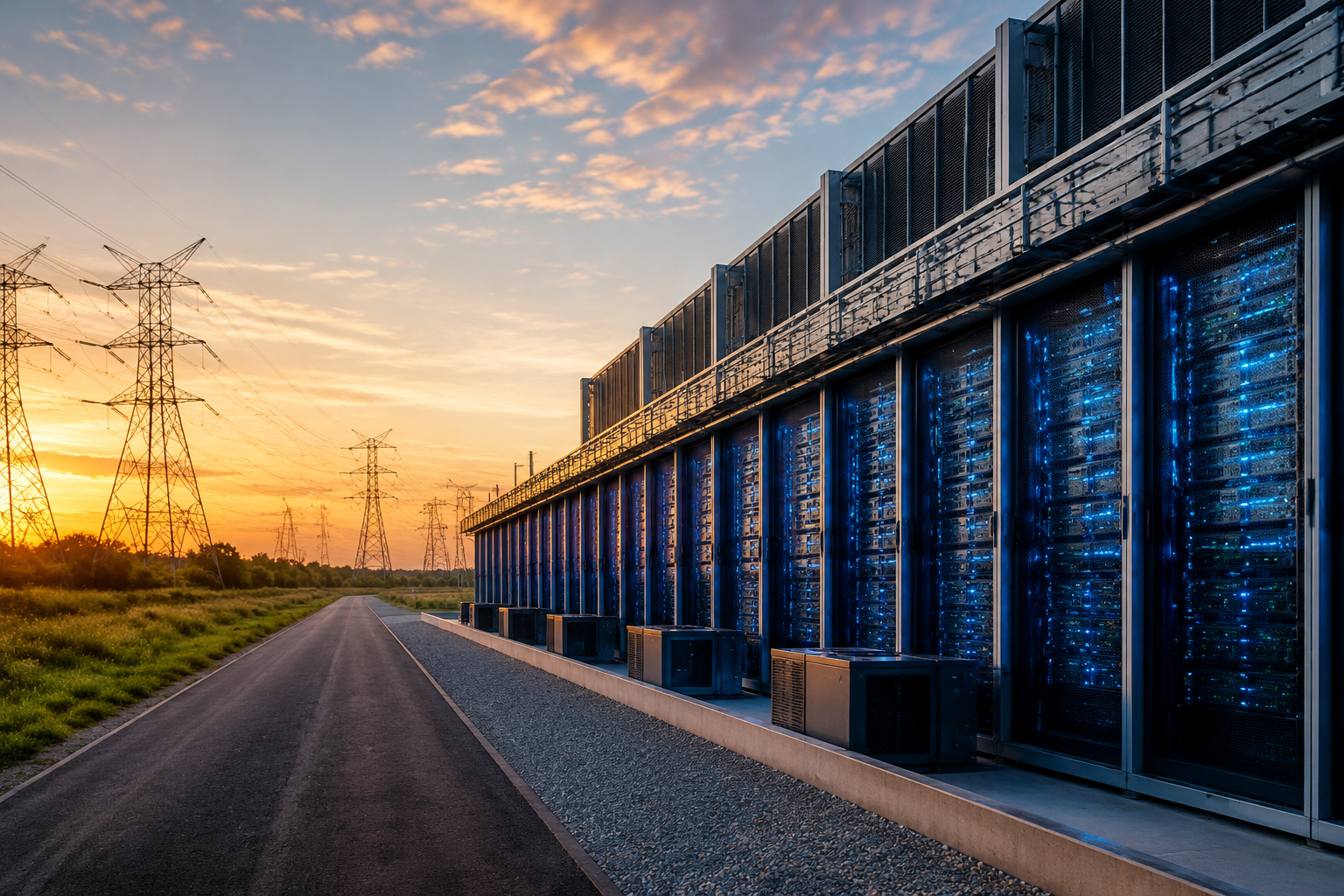
Behind every website, streaming video, cloud file and AI query sits a data center — a building full of computer servers running around the clock. As demand for digital services and artificial intelligence surges, these facilities are multiplying across the United States, bringing investment, jobs and new pressures on local power grids.
Why Data Centers Are Growing
The explosion of cloud computing, streaming and especially AI has driven enormous demand for computing power. Training and running AI models requires vast amounts of processing, and that means more servers, more buildings and more electricity.
Where They Are Built
Certain regions have become data center hubs, drawn by cheap land, reliable power, cool climates and tax incentives. Northern Virginia is famously dense with data centers, but clusters have also grown in states across the South, Midwest and West. Communities often welcome the investment and tax revenue.
The Energy Challenge
Data centers use a great deal of electricity, and their rapid growth is straining some local grids and raising questions about energy supply. The biggest facilities can consume as much power as a small city. This has pushed operators and utilities to plan major new power capacity and has intensified interest in efficiency and clean energy.
Toward Greener Computing
- Renewable energy deals let operators power facilities with solar and wind.
- Efficiency improvements reduce the energy needed for cooling and computing.
- Water and heat reuse projects aim to limit environmental impact.
Balancing Growth and Impact
Data centers are essential infrastructure for the digital economy, and demand shows no sign of slowing. The challenge for communities and the country is to capture the benefits — investment and jobs — while managing the energy and environmental costs responsibly.