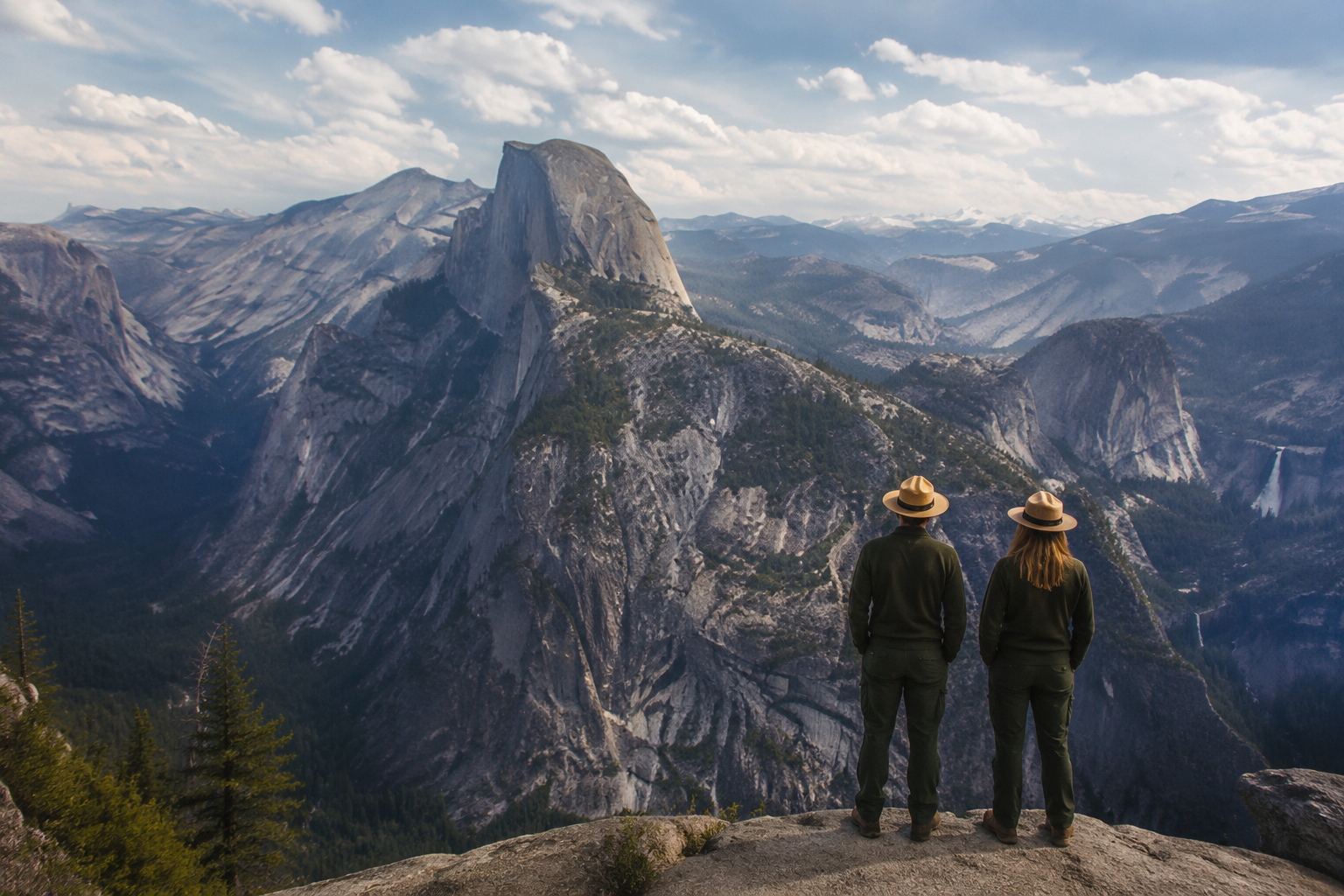
The national park has been called “America’s best idea” — and it is one the United States gave to the world. The story of how the country decided to preserve its most spectacular landscapes for everyone is a remarkable chapter of history.
The First National Park
In 1872, the U.S. established Yellowstone as the world’s first national park, setting aside more than two million acres of geysers, canyons and wildlife “for the benefit and enjoyment of the people.” It was a radical concept: land protected by the government for public use rather than private development.
The Conservation Movement
The idea grew alongside a broader conservation movement. Figures like naturalist John Muir championed the protection of wild places, and President Theodore Roosevelt, an avid outdoorsman, dramatically expanded protected lands in the early 1900s, establishing parks, monuments, forests and wildlife refuges.
Creating the Park Service
As the number of parks grew, they needed unified management. In 1916, the National Park Service was created to oversee them, with a mission to preserve the parks unimpaired for future generations while making them accessible to visitors — a balance the agency still navigates today.
Expansion and Inclusion
Over the following century, the system expanded far beyond scenic landscapes to include historic sites, battlefields, seashores and cultural landmarks. In recent decades, new sites have increasingly recognized a fuller range of American history, including the stories of Indigenous peoples, enslaved people and the civil rights movement.
A Global Legacy
The American model inspired national parks around the world, making the idea one of the country’s most influential exports. Today the U.S. system includes more than 400 sites visited by hundreds of millions of people each year.
Why It Still Matters
The national parks endure as a shared inheritance — places where any visitor, regardless of wealth, can experience the country’s natural and historical treasures. More than a century after Yellowstone, the idea remains as powerful as ever.