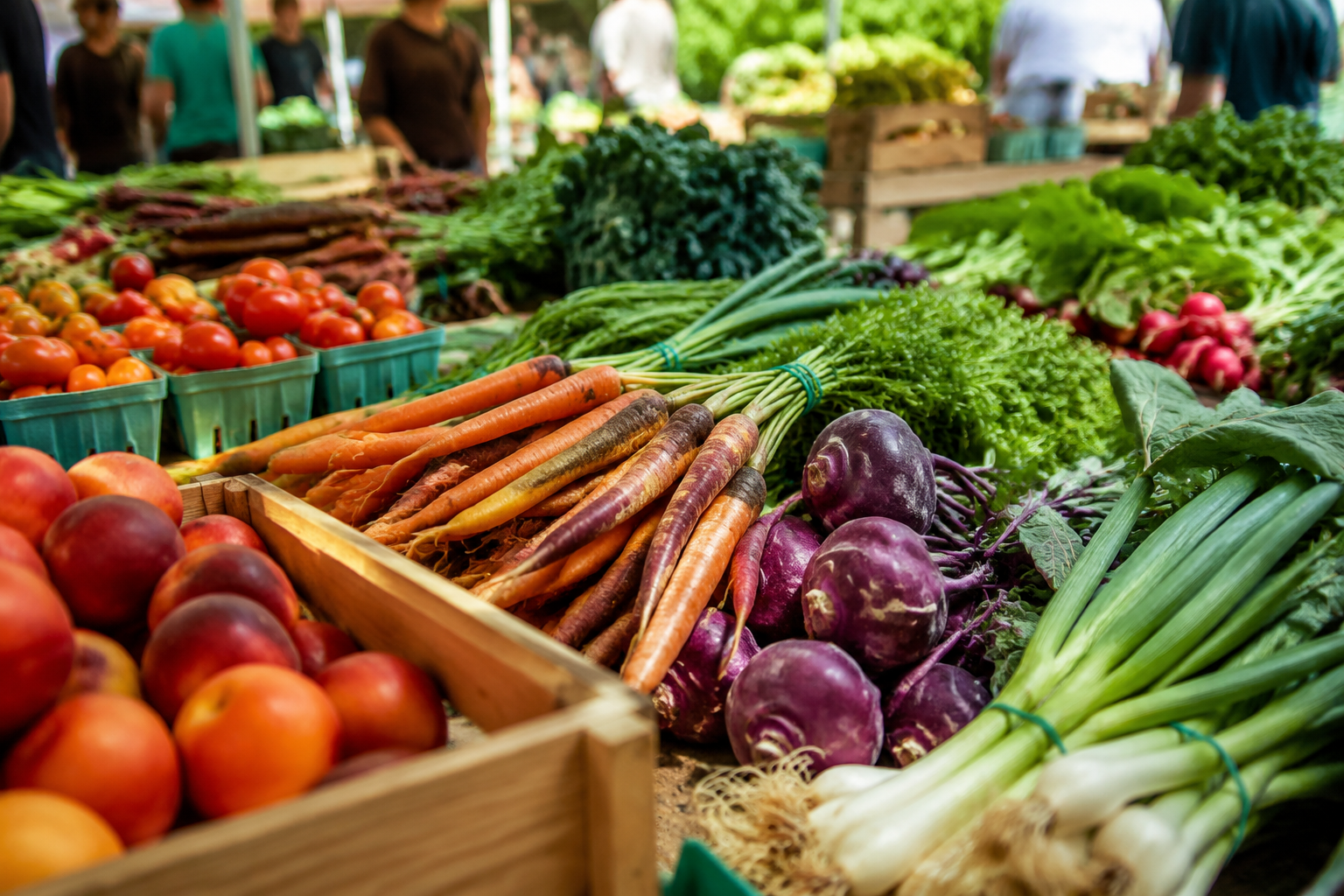
Few experiences capture the flavor of a place like its farmers market. Across the United States, these markets connect shoppers directly with the people who grow their food, and they change with the seasons in ways a supermarket never does.
Eating With the Seasons
The joy of a farmers market is that it reflects what is actually ripe right now. Shopping this way means fresher food, better flavor and often lower prices at peak harvest.
- Spring — asparagus, peas, strawberries, leafy greens and herbs.
- Summer — tomatoes, corn, peaches, berries, peppers and zucchini.
- Fall — apples, pumpkins, winter squash, root vegetables and cider.
- Winter — in milder regions, hearty greens, citrus and storage crops.
Regional Character
Markets take on the personality of their region. In the Pacific Northwest you might find wild mushrooms and berries; in the South, peaches, okra and boiled peanuts; in the Northeast, maple syrup and heirloom apples; in the Southwest, chiles and cactus fruit. The market is a fast lesson in local agriculture.
How to Shop Like a Regular
- Arrive early for the best selection, or late for end-of-day deals.
- Bring cash and a reusable bag, though many vendors now take cards.
- Talk to the growers — they will tell you what is best that week and how to cook it.
- Buy what looks best rather than sticking rigidly to a list.
More Than Food
Farmers markets are also community gathering places, often featuring local bakers, cheesemakers, prepared foods and live music. Supporting them keeps money in the local economy and helps preserve small farms.
Wherever you travel in the U.S., a Saturday morning at the farmers market is one of the best — and tastiest — ways to understand a place.