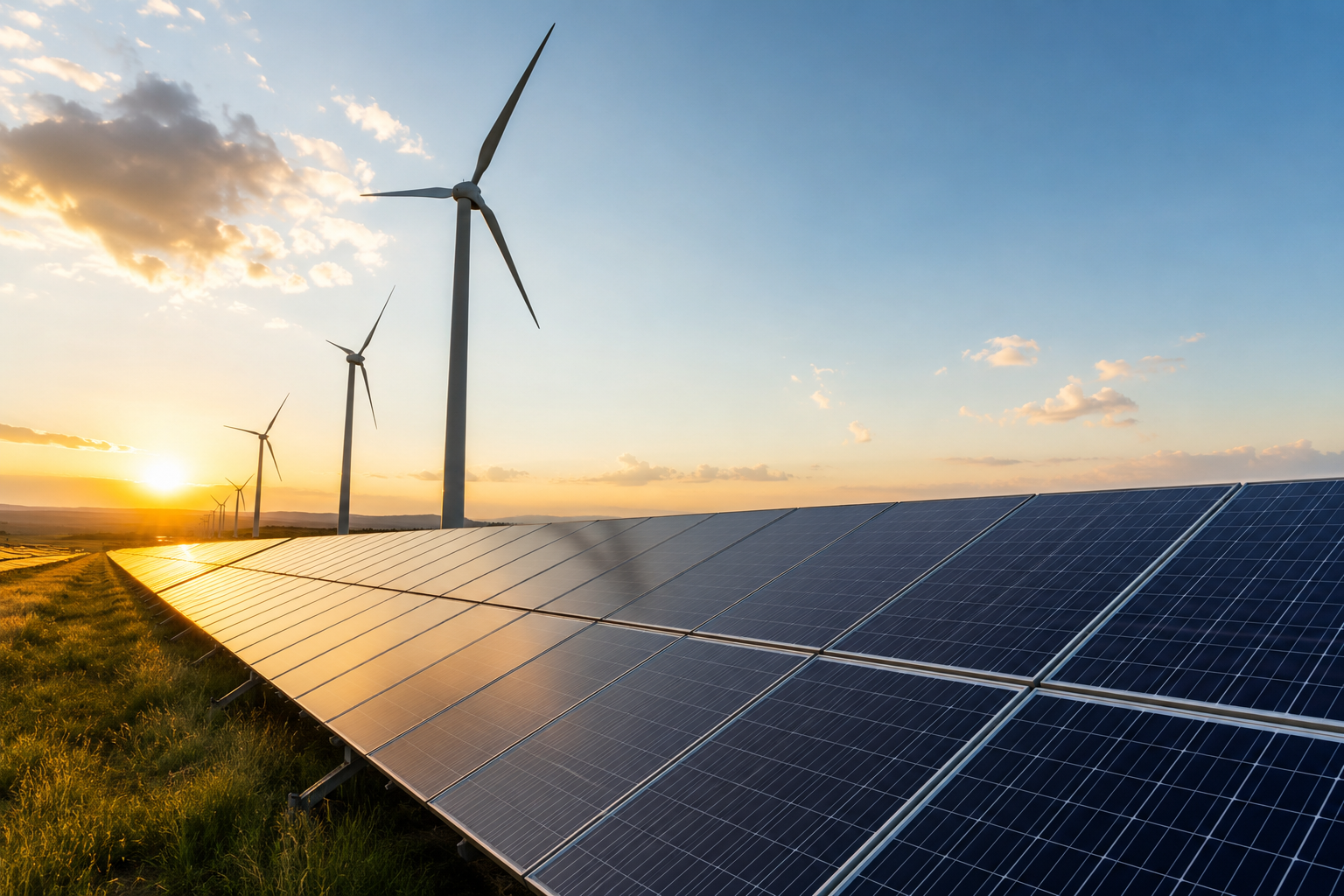
Renewable energy has moved from the margins to the mainstream of the American power system. Solar panels and wind turbines now generate a significant and growing share of the nation’s electricity, driven by falling costs and improving technology.
The Cost Revolution
The biggest driver of the renewable boom is economics. The cost of solar panels and wind turbines has fallen dramatically over the past decade, making them among the cheapest sources of new electricity in many parts of the country. What was once subsidized novelty is now often the most affordable option.
Where the Power Comes From
- Wind — vast wind farms across the Great Plains and Texas, plus growing offshore projects along the coasts.
- Solar — large utility-scale solar farms in sunny states, plus rooftop panels on homes and businesses.
- Storage — large batteries that store energy for when the sun is not shining or the wind is not blowing.
The Role of Batteries
A key challenge for renewables is that the sun and wind are intermittent. Advances in battery storage are helping solve this, allowing excess energy to be stored and released when needed. Grid-scale batteries are increasingly paired with solar and wind projects, making renewable power more reliable.
The Challenges
The transition is not without obstacles. The electric grid needs upgrades to carry power from windy and sunny regions to cities, permitting and transmission lines can take years to build, and integrating large amounts of variable power requires careful management. Manufacturing and supply chains are also adapting.
An Accelerating Shift
Despite the hurdles, the momentum is clear. As technology improves and costs keep falling, solar and wind are set to play an ever-larger role in powering American homes, businesses and vehicles — reshaping the country’s energy landscape for decades to come.