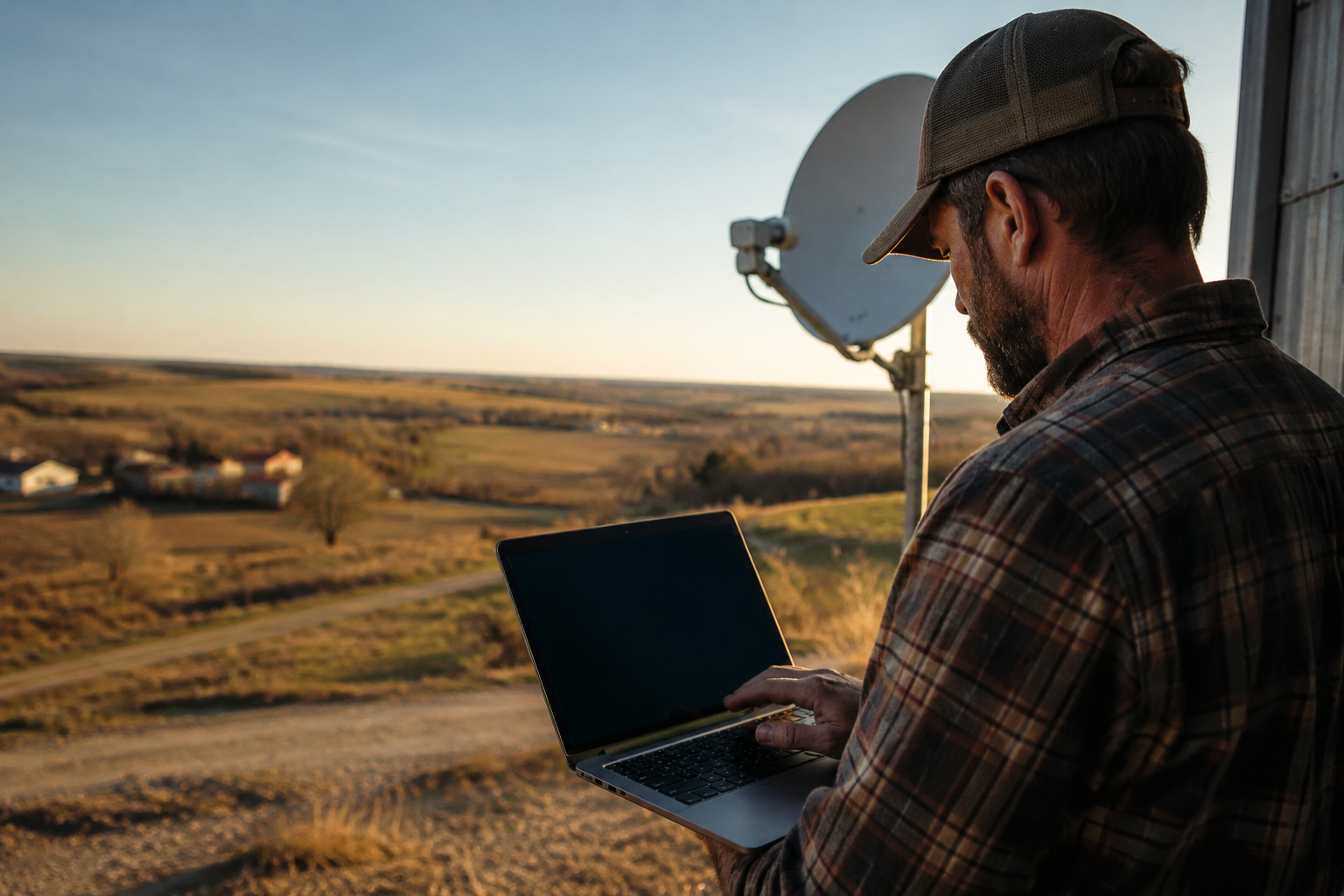
In an era when so much of daily life — work, school, healthcare and commerce — happens online, reliable high-speed internet has become as essential as electricity. Yet millions of Americans, particularly in rural areas, still lack dependable broadband access. Closing this “digital divide” has become a major national effort.
What the Digital Divide Looks Like
The divide falls hardest on rural and remote communities, where low population density makes it expensive to build networks. It also affects tribal lands and some lower-income areas. Without good connectivity, students struggle with online learning, patients miss out on telehealth, and businesses cannot reach customers — widening gaps in opportunity.
How the Gap Is Being Closed
Efforts to expand broadband combine several approaches:
- Public investment in infrastructure to reach areas that markets have not served.
- Fiber-optic expansion to bring high-capacity lines to small towns.
- Fixed wireless and satellite internet, including new low-Earth-orbit satellite services that can reach remote locations.
- Electric cooperatives in some regions building networks much as they once brought power to the countryside.
The Role of Satellites
A significant recent development is the rise of satellite internet from constellations of low-orbiting satellites, which can deliver broadband to places too remote for cables. While not a cure-all, it has expanded options for the hardest-to-reach households.
Why It Matters
Connectivity increasingly determines access to jobs, education and services. Bringing broadband to underserved communities is not just a technical project — it is about ensuring that geography does not dictate opportunity. As the work continues, the goal is a country where a fast, reliable connection is available no matter where you live.
Looking Forward
Closing the digital divide is a long-term effort, but momentum has been building. Each new mile of fiber and each newly connected community brings the country closer to a future where everyone can fully participate in the digital economy.