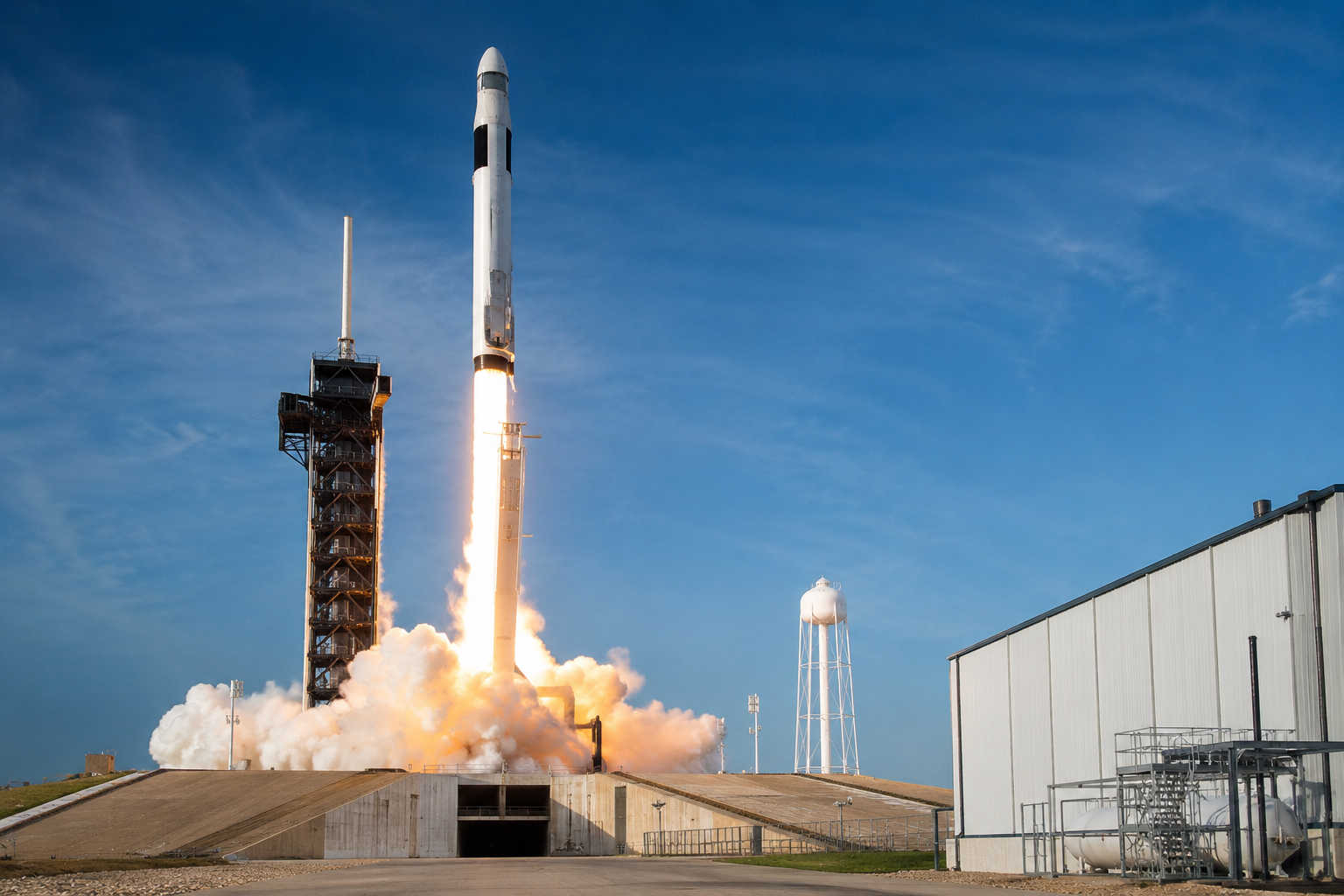
For most of the space age, spaceflight was the domain of governments. Today, private companies launch rockets, deploy satellites and even carry astronauts — ushering in a new commercial space era centered in the United States.
From Government to Private Enterprise
NASA remains central to American spaceflight, but it increasingly partners with private companies rather than building and operating everything itself. This shift has lowered costs, accelerated innovation and opened space to a wider range of players, from established aerospace firms to ambitious startups.
What Commercial Space Includes
- Rocket launches — private vehicles now carry cargo and crew to orbit and the International Space Station.
- Satellite constellations — fleets of satellites provide internet, imaging and communications.
- Space tourism — early flights have carried private citizens to the edge of space and beyond.
- Reusable rockets — a breakthrough that dramatically cuts launch costs.
Why It Matters
Cheaper, more frequent access to space has ripple effects. Satellite networks extend internet to remote areas, improve weather forecasting and enable navigation. Lower costs make scientific missions more feasible. And a growing industry creates high-skilled jobs across many states with launch sites, factories and research centers.
The Challenges Ahead
Rapid growth brings new issues: crowding and debris in orbit, the need for updated regulations, and questions about safety and sustainability in space. Managing these responsibly will be essential as launches multiply.
A Wide-Open Frontier
The commercial space industry has turned what was once purely a government endeavor into a dynamic marketplace. With ambitions ranging from satellite internet to lunar missions, the United States sits at the center of a new and fast-moving chapter in the story of space.