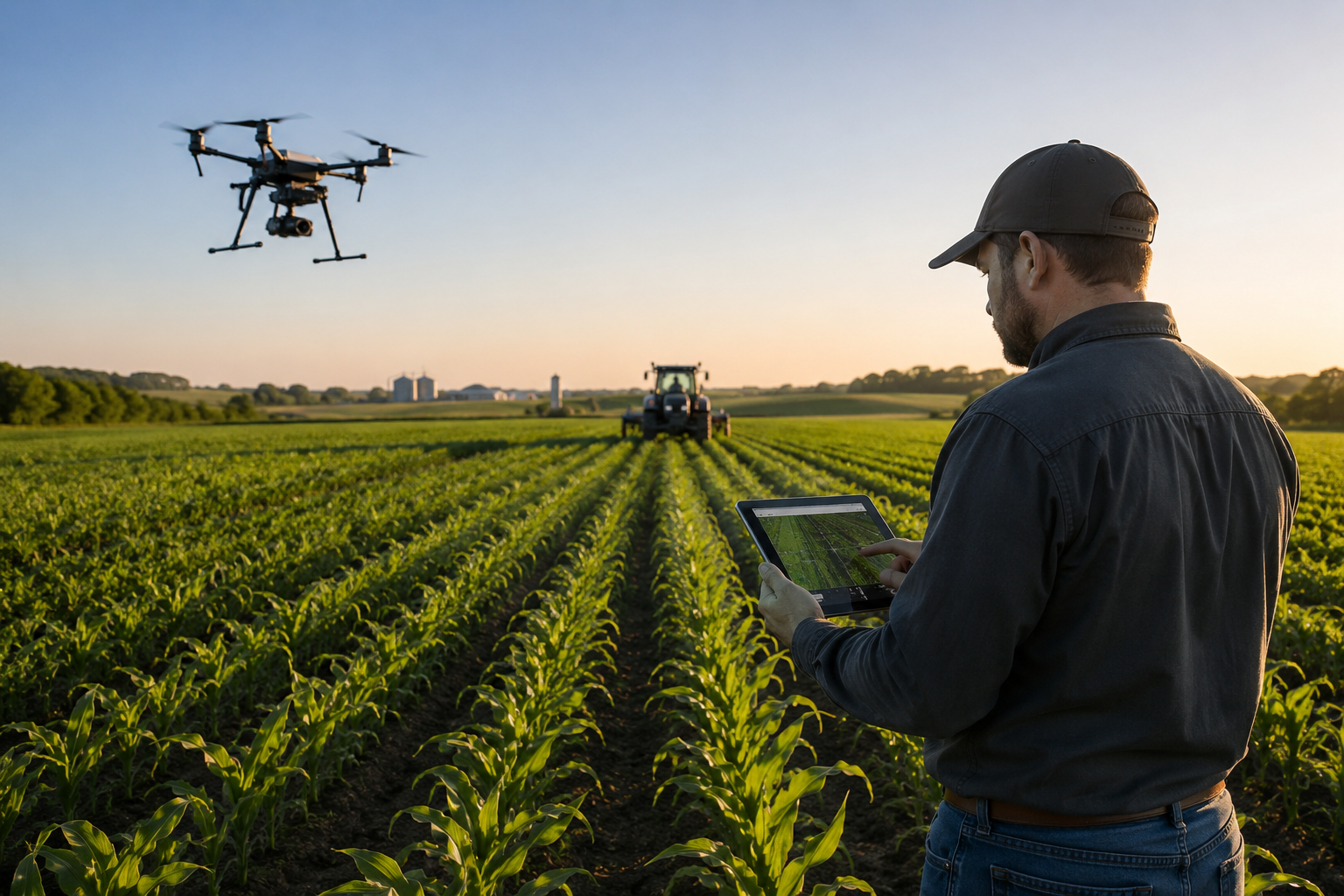
The American farm is becoming high-tech. Across the country’s vast agricultural regions, GPS-guided machinery, drones, sensors and data analytics are transforming how food is grown. This approach, known as precision agriculture, is helping farmers produce more while using fewer resources.
What Precision Agriculture Is
Traditional farming treats a whole field the same. Precision agriculture treats each part of a field according to its specific needs — applying water, seed and fertilizer exactly where and when they are needed. The result is less waste, lower costs and reduced environmental impact.
The Technology Behind It
- GPS-guided tractors plant and harvest with centimeter accuracy, reducing overlap.
- Drones and satellites survey crops, spotting stress, pests or irrigation problems.
- Soil and moisture sensors tell farmers exactly when and where to water.
- Data software turns all this information into actionable decisions.
The Benefits
Precision techniques can boost yields while cutting the use of water, fuel, fertilizer and pesticides. That saves farmers money and reduces runoff and emissions. For a country that produces a huge share of the world’s food, even small efficiency gains add up to enormous impact.
The Challenges
The technology is not free, and the upfront cost can be a barrier, especially for smaller farms. Reliable rural internet is essential for many tools — another tie to the digital divide. And farmers must learn to manage and interpret growing amounts of data.
The Future of Farming
As tools become more affordable and capable, precision agriculture is spreading from large operations to farms of all sizes. Combined with advances in robotics and artificial intelligence, it points toward a future of farming that is more productive, more sustainable and more data-driven than ever.