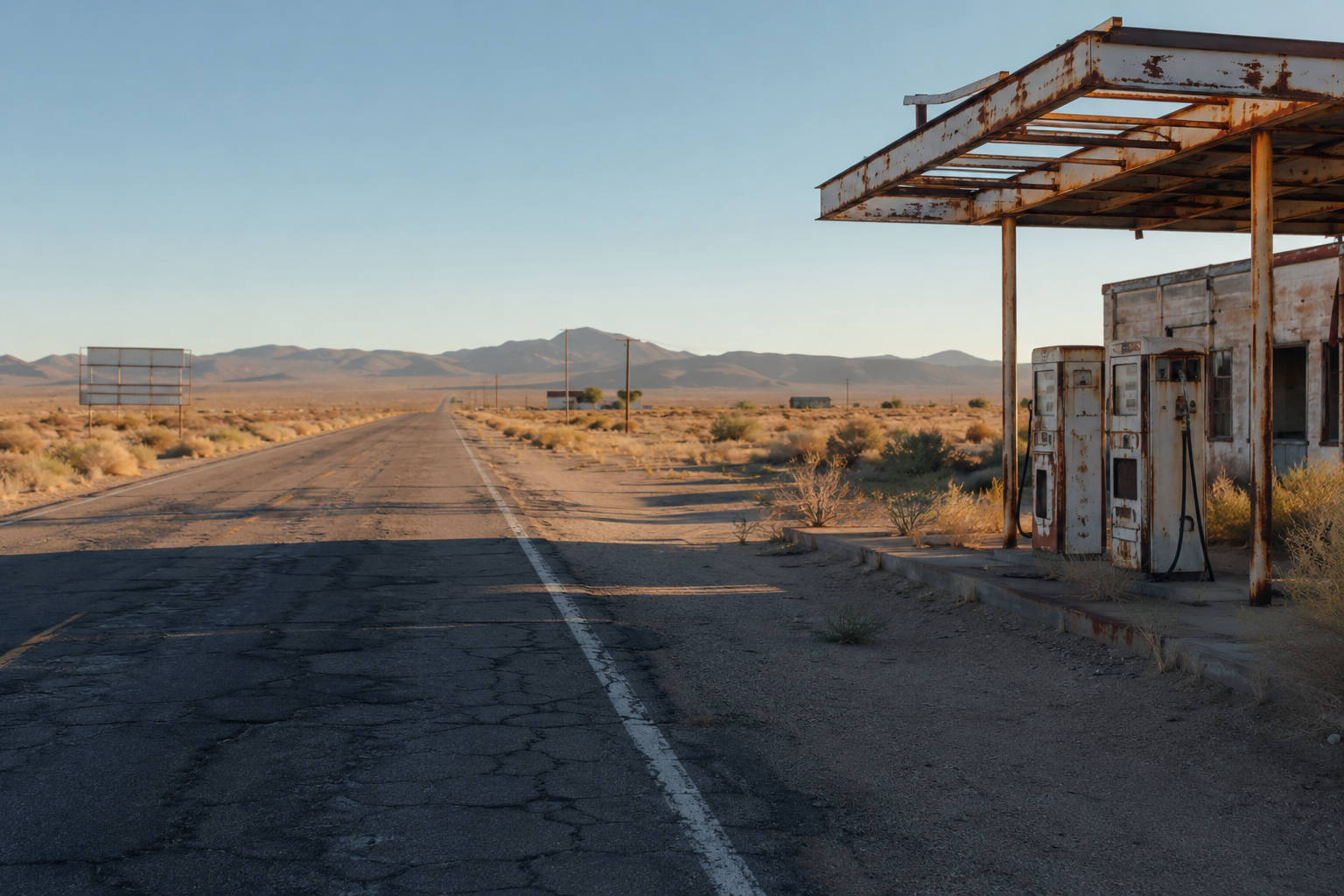
Few highways have inspired as much song, story and nostalgia as Route 66. Stretching roughly 2,400 miles from Chicago to the Pacific at Santa Monica, it became a symbol of mobility, opportunity and the open road.
A Road for a New Era
Established in 1926, Route 66 was one of the first highways in the U.S. numbered highway system. Unlike grid-straight later roads, it connected hundreds of small towns, bringing commerce and travelers through their main streets. It crossed eight states and three time zones.
The Dust Bowl and the Depression
In the 1930s, the road took on a deeper meaning. As drought and economic collapse devastated the Great Plains, hundreds of thousands of families migrated west in search of work, many along Route 66. The novelist John Steinbeck called it “the Mother Road” in The Grapes of Wrath, and the name stuck.
The Golden Age
After World War II, rising car ownership and a booming economy turned Route 66 into a vacation icon. Motels, diners, gas stations and roadside attractions — giant statues, neon signs, trading posts — sprang up to serve travelers. The road entered popular culture through music and television.
The Decline
Ironically, the road’s popularity helped doom it. The Interstate Highway System, begun in the 1950s, built faster multi-lane routes that bypassed the old road and its towns. Segment by segment, Route 66 was replaced, and in 1985 it was officially removed from the highway system.
Revival and Legacy
Far from disappearing, Route 66 found new life as a heritage attraction. Travelers from around the world now seek out surviving stretches, restored neon signs, classic diners and quirky landmarks. Many towns embrace the nostalgia, and “Historic Route 66” signs mark the old alignment.
The Mother Road endures less as a way to get somewhere than as a journey into a particular vision of America — one of small towns, big skies and the romance of the road.