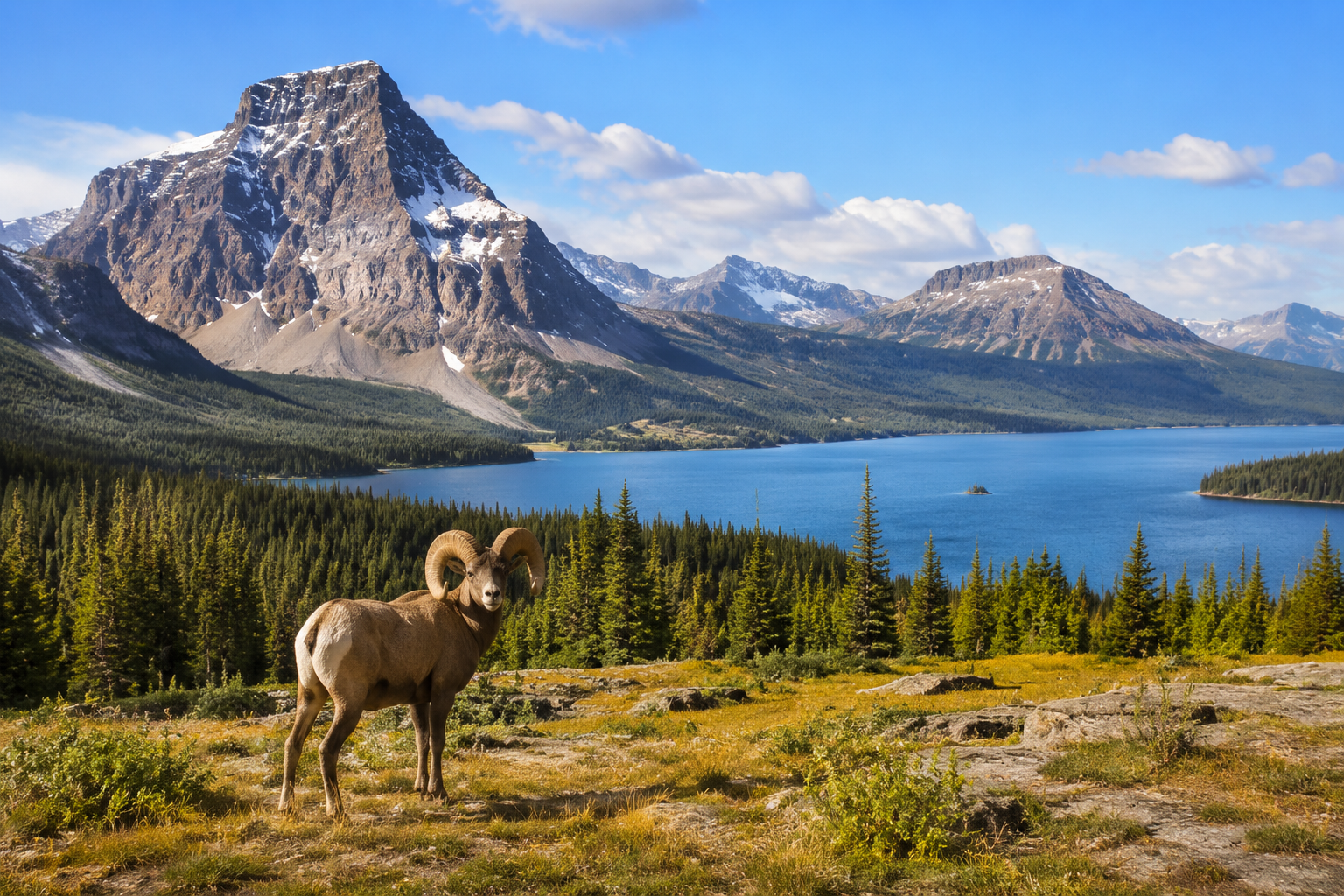
Montana earns its “Big Sky” nickname the moment you arrive — the horizons are wide, the mountains abrupt, and the wilderness genuinely vast. The state shares two of the country’s crown-jewel national parks, and a well-planned trip can take in both.
Glacier National Park
In the state’s northwest, Glacier National Park protects a landscape of sharp peaks, alpine lakes and the famous Going-to-the-Sun Road, an engineering marvel that climbs over the Continental Divide at Logan Pass. The road is typically only fully open from late June or July through early fall, depending on snow.
Highlights include the turquoise water of Lake McDonald, the wildflower meadows around Logan Pass, and trails like the Highline and the hike to Hidden Lake. The park is grizzly country, so carry bear spray, make noise on the trail, and store food properly. In recent years a vehicle reservation system has been used during peak season — check requirements before you go.
Yellowstone’s Northern Reaches
Most of Yellowstone lies in Wyoming, but its northern entrances are in Montana, and the towns of Gardiner and West Yellowstone make excellent bases. From the north you can reach the Lamar Valley, often called “America’s Serengeti” for its concentrations of bison, elk, wolves and bears — best viewed at dawn and dusk with binoculars.
The Mammoth Hot Springs terraces, with their tiered formations of mineral-laden water, sit just inside the Montana entrance. Geysers, including Old Faithful, lie deeper in the park to the south.
The Country in Between
The drive between the parks is part of the experience. Consider routing through the Beartooth Highway, a high mountain road that switchbacks above 10,000 feet with staggering views — open only in summer. Towns like Bozeman and Livingston offer good food, museums and a base for fly-fishing on blue-ribbon trout rivers like the Yellowstone and the Madison.
Planning Tips
- Reserve early. Park lodges and gateway-town hotels book up months ahead for summer.
- Mind the seasons. High mountain roads close for much of the year; confirm openings.
- Respect wildlife. Stay at least 100 yards from bears and wolves, and 25 yards from bison and elk.
- Pack for all weather. Mountain temperatures swing widely even in July.
Montana rewards travelers who give it time. Between the two parks lies some of the least-crowded, most beautiful country in the Lower 48 — and often the empty road is the highlight.