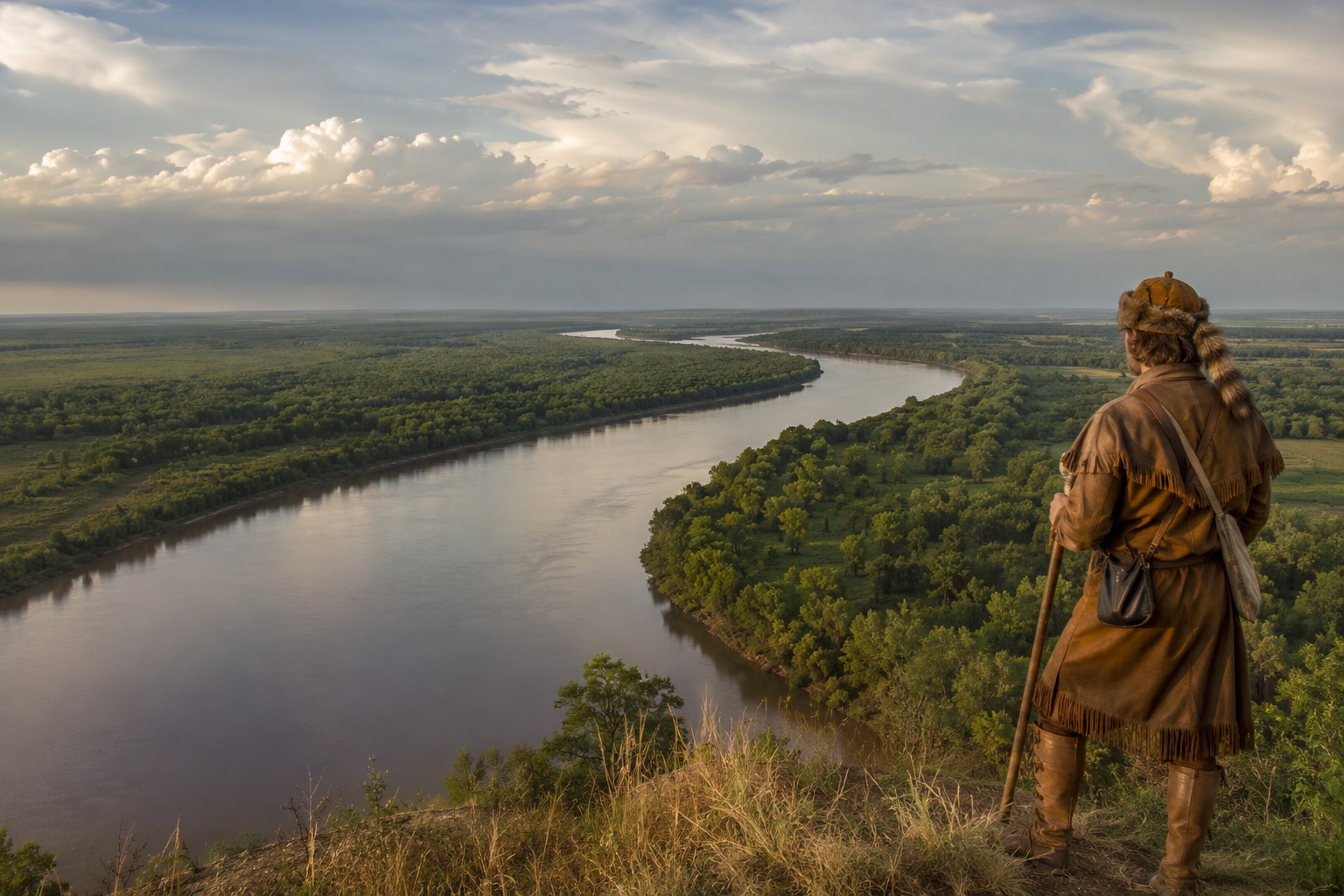
In 1803, the United States bought a vast territory from France in a deal that doubled the size of the young country almost overnight. The Louisiana Purchase is often called the greatest real estate bargain in history.
The Background
The territory of Louisiana — a huge expanse stretching from the Mississippi River to the Rocky Mountains — had passed from France to Spain and back to France under Napoleon. American leaders worried about who controlled the port of New Orleans, which was vital for shipping goods from the country’s western farms down the Mississippi.
An Unexpected Offer
President Thomas Jefferson sent envoys to France hoping to buy New Orleans and a strip of land. But Napoleon, needing money for war in Europe and having abandoned his ambitions in North America, offered to sell the entire territory. The Americans seized the opportunity.
The Deal
The United States agreed to pay about $15 million for roughly 828,000 square miles — land that would eventually form all or part of fifteen states. The price worked out to only a few cents per acre.
A Constitutional Question
The purchase troubled Jefferson, who believed in limited federal power and was unsure the Constitution authorized buying territory. He set aside his doubts, judging the opportunity too great to pass up, and the Senate ratified the treaty.
Exploring the New Land
Much of the territory was unmapped by the U.S. government. Jefferson commissioned the Lewis and Clark Expedition to explore it, find a route to the Pacific, and document its peoples, plants and animals. Their journey from 1804 to 1806 opened the West to American imagination.
The Long Shadow
The purchase set the United States on a path to becoming a continental power. It also intensified questions that would define the century: the expansion of slavery into new territory, and the fate of the many Native American nations who already lived on the land and whose claims the deal ignored.
For a few cents an acre, the map of North America — and the future of the nation — was redrawn.