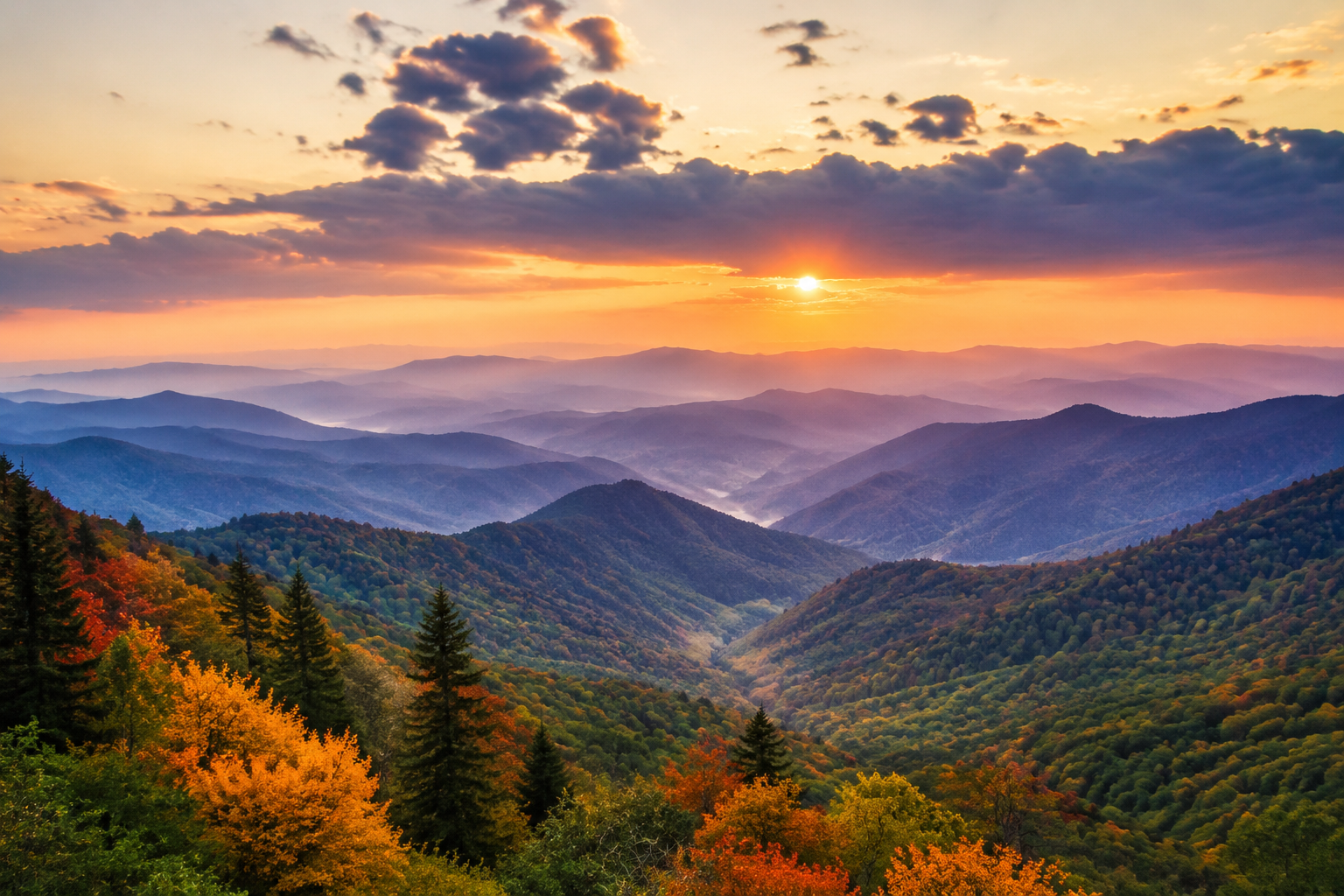
Straddling the border of Tennessee and North Carolina, Great Smoky Mountains National Park is the most visited national park in the country — and one of the few with no entrance fee. Its blue, mist-wrapped ridges give the Smokies their name and their dreamlike atmosphere.
Scenic Drives
Newfound Gap Road crosses the park from Gatlinburg, Tennessee, to Cherokee, North Carolina, climbing through changing forest zones with overlooks along the way. For a quieter experience, the one-way Cades Cove Loop circles a historic valley where deer, wild turkeys and black bears are often seen among preserved cabins and churches.
Hiking
- Laurel Falls — a popular paved trail to a pretty waterfall.
- Clingmans Dome — the highest point in the park, with an observation tower and, on clear days, vast views.
- Alum Cave to Mount LeConte — a classic, more strenuous climb.
The park has over 800 miles of trails, including a long stretch of the Appalachian Trail along its crest.
Wildlife and Wildflowers
The Smokies are famous for biodiversity, sometimes called the “Salamander Capital of the World.” Spring brings a renowned wildflower bloom, and in early summer, synchronous fireflies put on a rare light show that draws visitors from around the world (access is by lottery). Black bears are a symbol of the park; keep your distance and store food properly.
History and Culture
Before it was a park, these mountains were home to the Cherokee and to Appalachian settlers. Preserved farmsteads, gristmills and churches at Cades Cove and Cataloochee tell that story, and the nearby Oconaluftee area honors Cherokee heritage.
Tips
- Go early to beat crowds and traffic, especially in fall.
- Fall foliage is spectacular but extremely popular.
- A parking tag is now required for vehicles — pick one up in advance.
The Smokies reward repeat visits across the seasons. Whether you come for the hiking, the history or simply the view of ridgelines fading into haze, the park lives up to its fame.