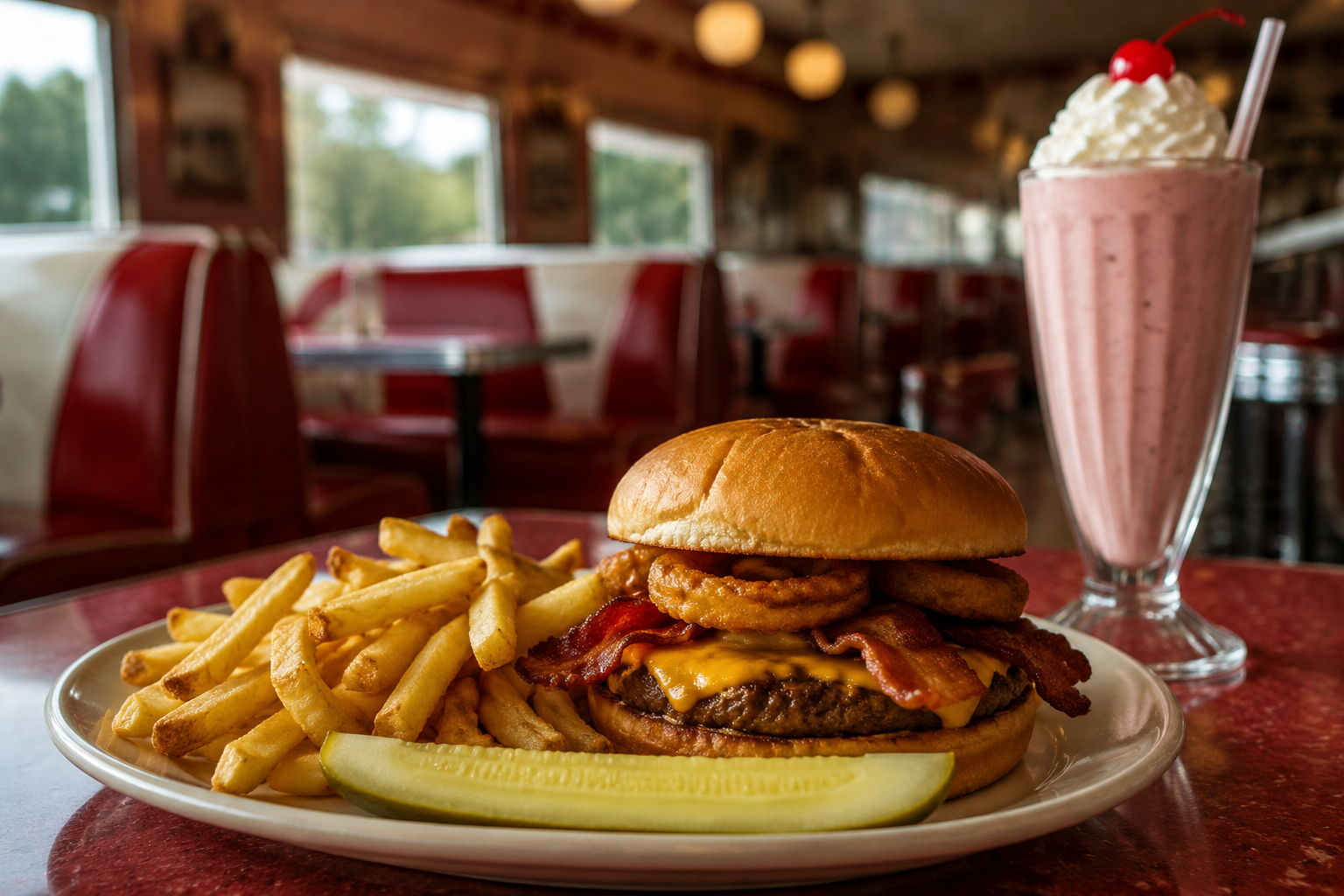
The diner is one of America’s most democratic institutions: a place where anyone can sit at the counter, order a cup of coffee and a plate of comfort food, and feel at home. Its chrome, vinyl and neon are woven into the country’s roadside landscape.
From Lunch Wagon to Landmark
The diner traces back to the late 1800s, when horse-drawn lunch wagons served late-night workers. These evolved into prefabricated, rail-car-shaped restaurants manufactured and shipped to roadside locations, especially in the Northeast. Their gleaming stainless steel and streamlined design captured the optimism of mid-20th-century America.
The Menu
The classic diner menu is vast and familiar: eggs and pancakes served all day, burgers and patty melts, club sandwiches, meatloaf, milkshakes and pie. Coffee is bottomless. The food is honest and affordable, made fast on a flat-top griddle in full view of the counter.
Regional Flavors
Diners take on local character. New Jersey is famously dense with diners and even claims the title of “Diner Capital.” In the South, the “meat-and-three” plate offers a protein and a choice of sides. Greek-American families operate many classic diners, adding dishes like souvlaki and rice pudding to the menu.
A Cultural Icon
The diner has become a symbol of America itself, immortalized in paintings, films and television. It is a setting for first dates and late-night conversations, a refuge for travelers and night-shift workers, and a great equalizer where strangers share a counter.
The Diner Today
While some classic diners have closed, many endure, and a wave of nostalgia has inspired both restorations and new diners built in the retro style. Their appeal is timeless: warmth, familiarity and a good meal at any hour.
To slide into a booth, order a coffee and watch the griddle work is to take part in a uniquely American ritual that has comforted travelers for generations.