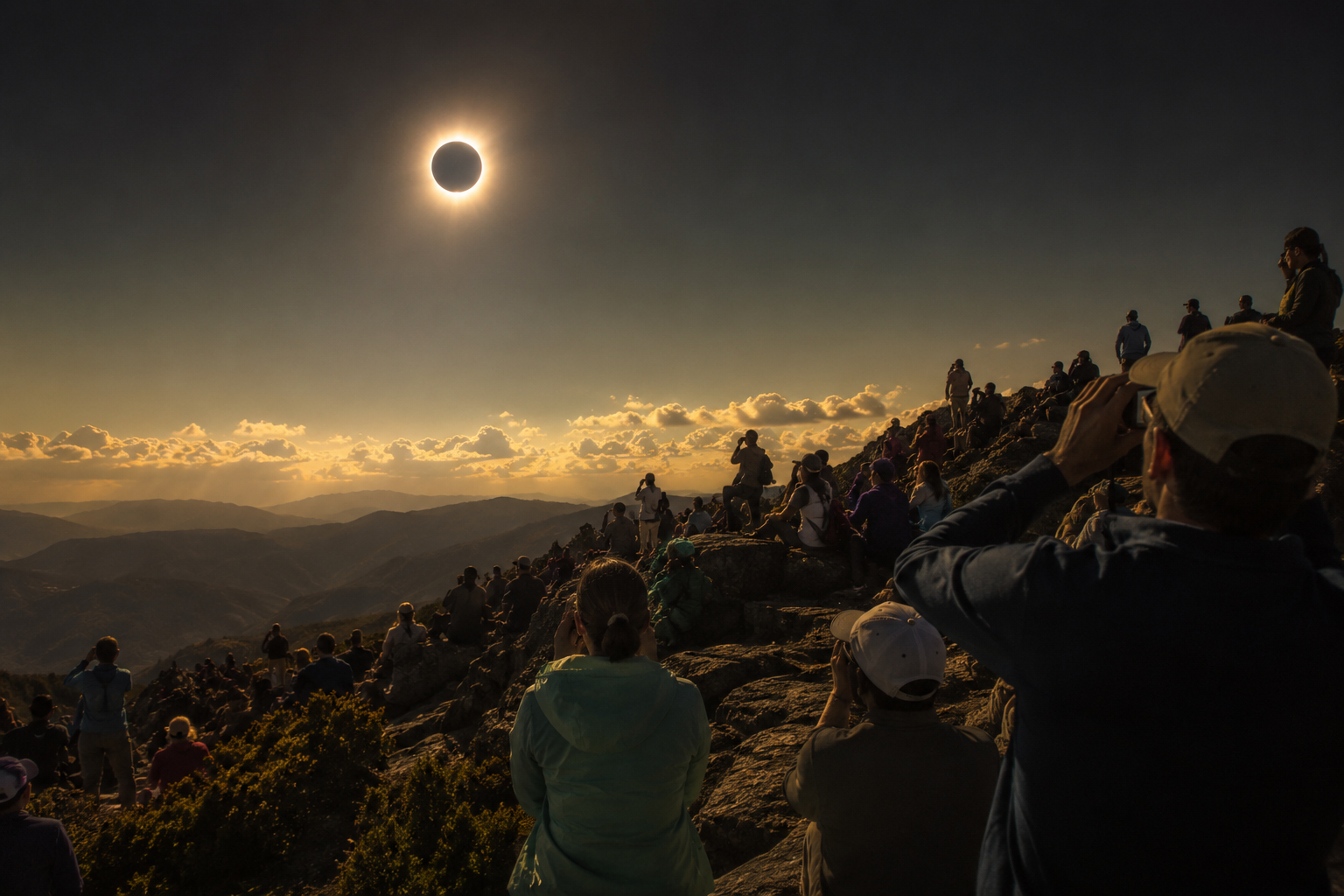
When the Moon passes perfectly between the Earth and the Sun, it casts a narrow band of total darkness across the landscape — and in recent years, these total solar eclipses have sparked a remarkable surge in travel known as eclipse tourism.
Why People Travel for Eclipses
A total solar eclipse is a rare and awe-inspiring sight. For a few minutes, day turns to twilight, stars appear, temperatures drop, and the Sun’s glowing corona becomes visible around the dark disk of the Moon. Witnessing “totality” is a profoundly different experience from a partial eclipse, and it can only be seen from within the narrow path the shadow traces across the ground.
The Impact on Small Towns
Because the path of totality often crosses rural areas and small towns, these communities can suddenly become destinations. Hotels book out far in advance, local businesses prepare for a rush of visitors, and officials plan for traffic and crowds. For a brief window, a quiet town can host thousands of eclipse chasers.
Planning to See One
- Be inside the path of totality — even a short distance outside it, the experience is dramatically different.
- Book accommodations early — sometimes a year or more ahead for major eclipses.
- Plan for traffic before and especially after the event.
- Have a weather backup, since clouds can spoil the view; mobility helps.
Safety First
Looking at the Sun without proper protection can cause permanent eye damage. Certified solar eclipse glasses are essential during the partial phases. Only during the brief moments of total coverage is it safe to look without them — and proper timing is critical.
A Shared Moment of Wonder
Beyond the logistics, eclipse tourism reflects something deeper: the human desire to witness the extraordinary. Strangers gather in fields and town squares, and when totality arrives, the collective gasp is part of the magic.
For those who plan ahead and position themselves in the path, a total solar eclipse offers a few unforgettable minutes that many describe as life-changing.