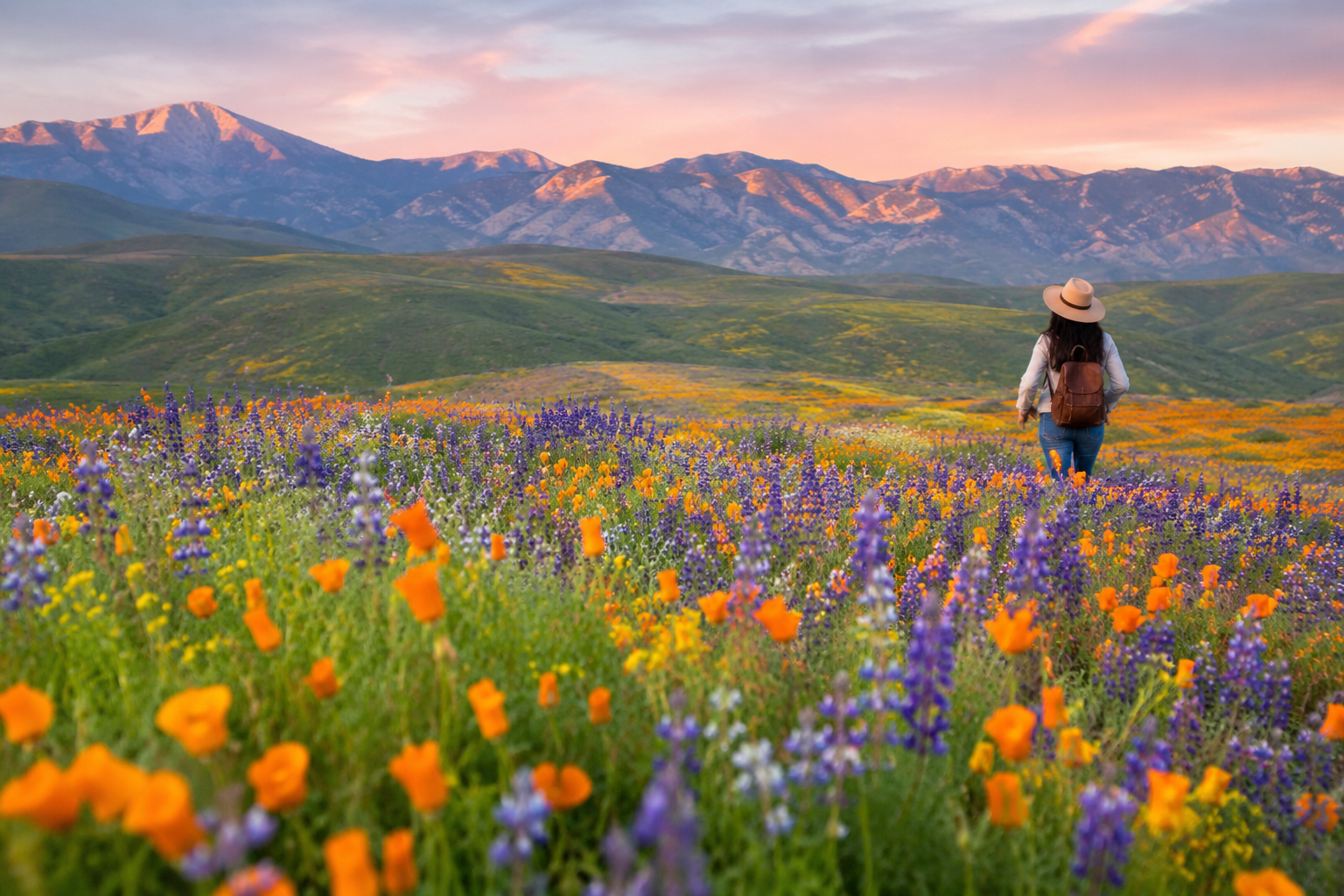
In certain years, after the right combination of rain and temperature, parts of the American West erupt in a spectacular display of wildflowers known as a “superbloom.” These rare events draw nature lovers and photographers from around the world.
What Causes a Superbloom
Superblooms typically follow a wet season in normally dry regions. Dormant seeds, some of which can wait years for the right conditions, germinate all at once, carpeting deserts and hillsides in color. Because they depend on weather, superblooms are unpredictable and do not happen every year.
Where to See Them
- California deserts — places like Anza-Borrego Desert State Park and parts of the Mojave can burst with poppies, lupines and desert flowers in big bloom years.
- Antelope Valley — its poppy reserve is famous for hillsides of orange in spring.
- Texas Hill Country — bluebonnets bloom along roadsides each spring, a beloved regional tradition.
- Arizona deserts — wildflowers and blooming cacti color the landscape in good years.
When to Go
Most desert blooms peak in early to mid-spring, though timing shifts with elevation and weather. Texas bluebonnets generally appear in spring as well. Following park and reserve updates is the best way to catch peak color, which can last only a couple of weeks.
Visiting Responsibly
Superblooms are fragile, and their popularity can threaten the very flowers people come to see. Responsible visitors should:
- Stay on trails and never trample or pick flowers.
- Avoid sitting or lying in the blooms for photos.
- Follow park guidance, as some areas limit access during peak events.
- Arrive early to avoid crowds at popular spots.
A superbloom is a fleeting natural wonder. Witnessing one — while treading lightly — is an unforgettable reminder of how quickly the desert can come to life.