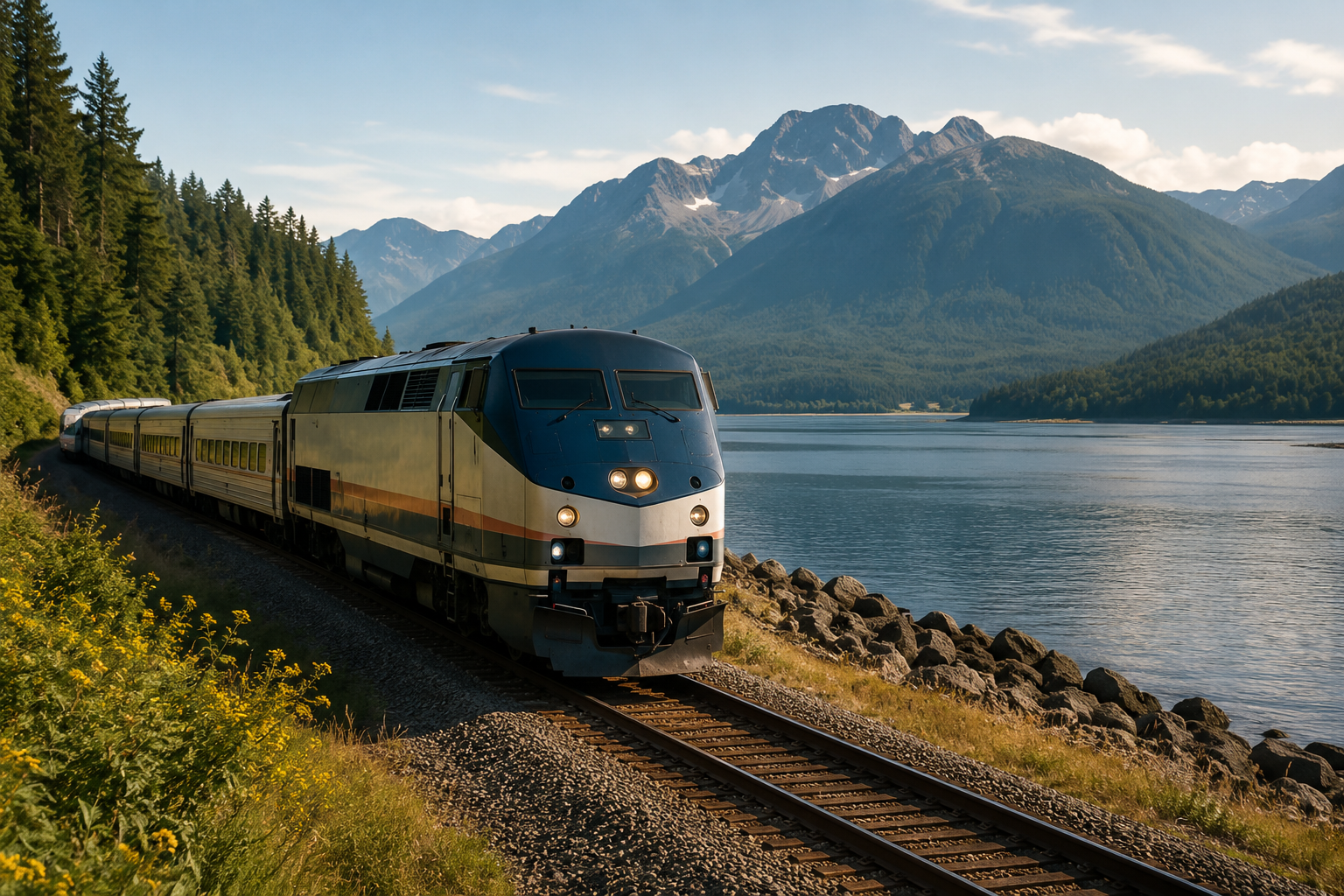
Train travel, long overshadowed by cars and planes in the United States, has been drawing renewed interest. Investment in rail, growing interest in scenic and lower-stress travel, and new and expanded routes are putting passenger trains back in the conversation.
The Scenic Appeal
For many travelers, the train is not just transportation but the experience itself. Famous long-distance routes pass through landscapes that highways and flight paths miss — the Rockies, the Pacific coast, the deserts of the Southwest and the river valleys of the East. Observation cars and a relaxed pace make the journey part of the trip.
Popular Routes
- The California Zephyr — a celebrated cross-country route through the Rockies and Sierra Nevada.
- The Coast Starlight — running along the West Coast with ocean and mountain views.
- The Empire Builder — crossing the northern plains and mountains toward the Pacific Northwest.
- The Northeast Corridor — the busiest passenger rail line in the country, linking major East Coast cities.
Investment and Expansion
Recent federal investment has aimed to modernize equipment, improve stations and study or develop new and restored routes. Several regions are exploring expanded service, and private high-speed rail projects have advanced in places like Florida and the Southwest.
Practical Considerations
- Trains can be slower than flying on long routes — the journey is the point.
- Sleeper cars offer beds and meals on overnight trips at a premium.
- Book ahead for the best fares and accommodations.
- Check schedules carefully, as some long-distance routes run only a few times a week.
Why It Matters
Beyond nostalgia, rail offers a lower-stress, scenic and often more sustainable way to travel. As interest grows and investment continues, the coming years may bring more options for seeing the country by train.
For travelers willing to slow down, the American railroad still offers one of the most memorable ways to cross the landscape.