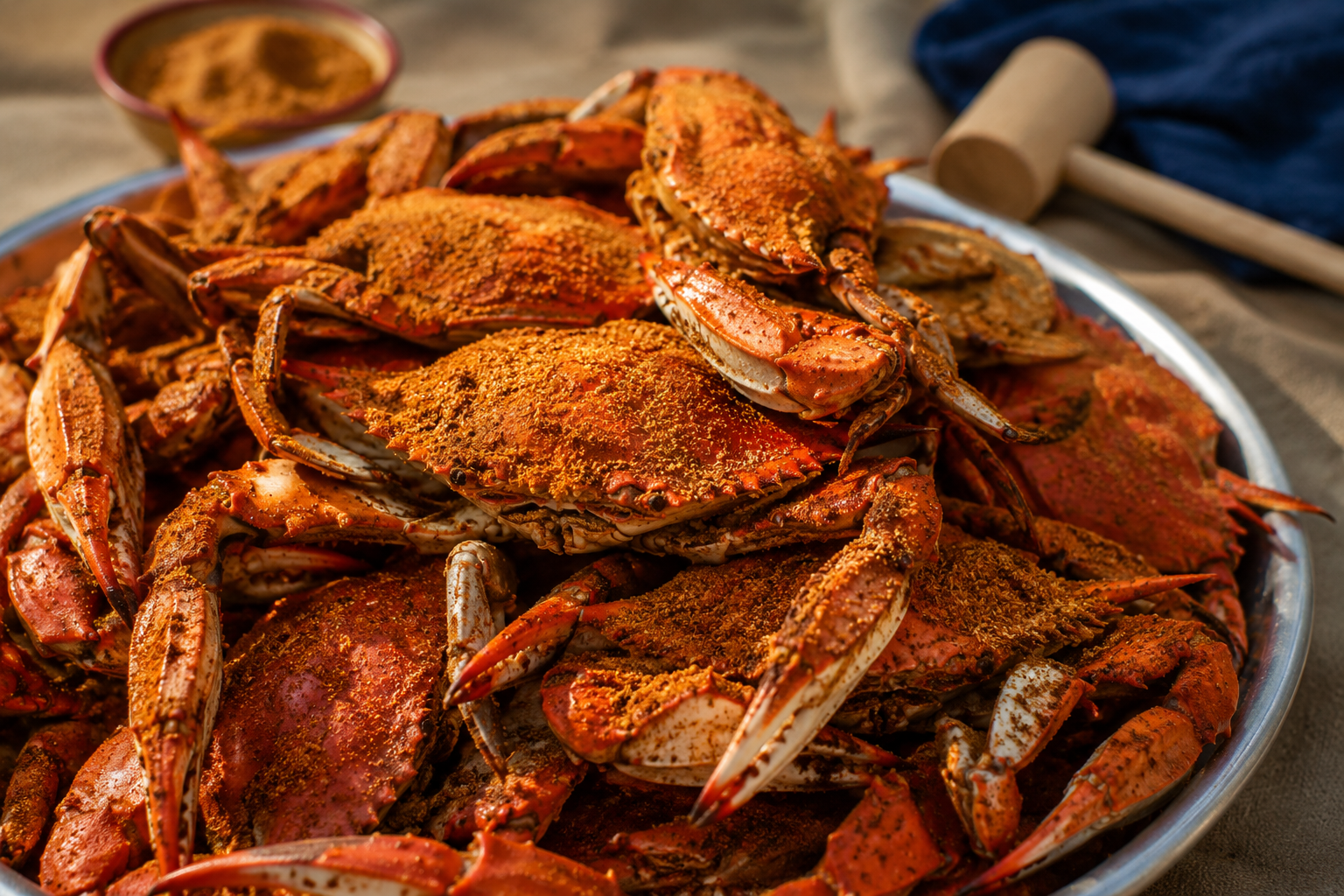
In Maryland, the blue crab is more than seafood — it is a way of life, a summer ritual centered on the Chesapeake Bay. Few regional food traditions are as hands-on and communal as a Maryland crab feast.
The Chesapeake Blue Crab
The Atlantic blue crab thrives in the brackish waters of the Chesapeake, the largest estuary in the United States. Its scientific name fittingly translates to “beautiful savory swimmer.” Crabbing has supported Bay communities for generations and remains central to the region’s identity and economy.
The Crab Feast
The classic Maryland crab feast is gloriously messy. Whole crabs are steamed and heavily seasoned, then dumped in a pile on a table covered with brown paper. Diners use wooden mallets and knives to crack the shells and pick out the sweet meat, a slow and social process accompanied by cold drinks and corn on the cob. Picking crabs is a skill learned young, and the leisurely pace is the point.
Old Bay Seasoning
No discussion of Maryland crabs is complete without Old Bay, the celery-salt-and-spice blend created in Baltimore in the 1940s. It is sprinkled liberally on steamed crabs and finds its way onto everything from fries to popcorn to the rims of cocktails. For many Marylanders, Old Bay is practically a regional flavor of home.
Beyond Steamed Crabs
- Maryland crab cakes — lump crab meat with minimal filler, broiled or fried.
- Cream of crab and Maryland crab soup — two beloved styles.
- Soft-shell crabs — crabs caught just after molting, eaten shell and all.
Conservation Matters
Blue crab populations rise and fall, and the health of the Chesapeake affects the harvest. Regulations on size and season help protect the species, and supporting the Bay’s restoration helps ensure the tradition continues.
To crack crabs at a paper-covered table on a warm evening is to take part in one of America’s great regional food rituals.