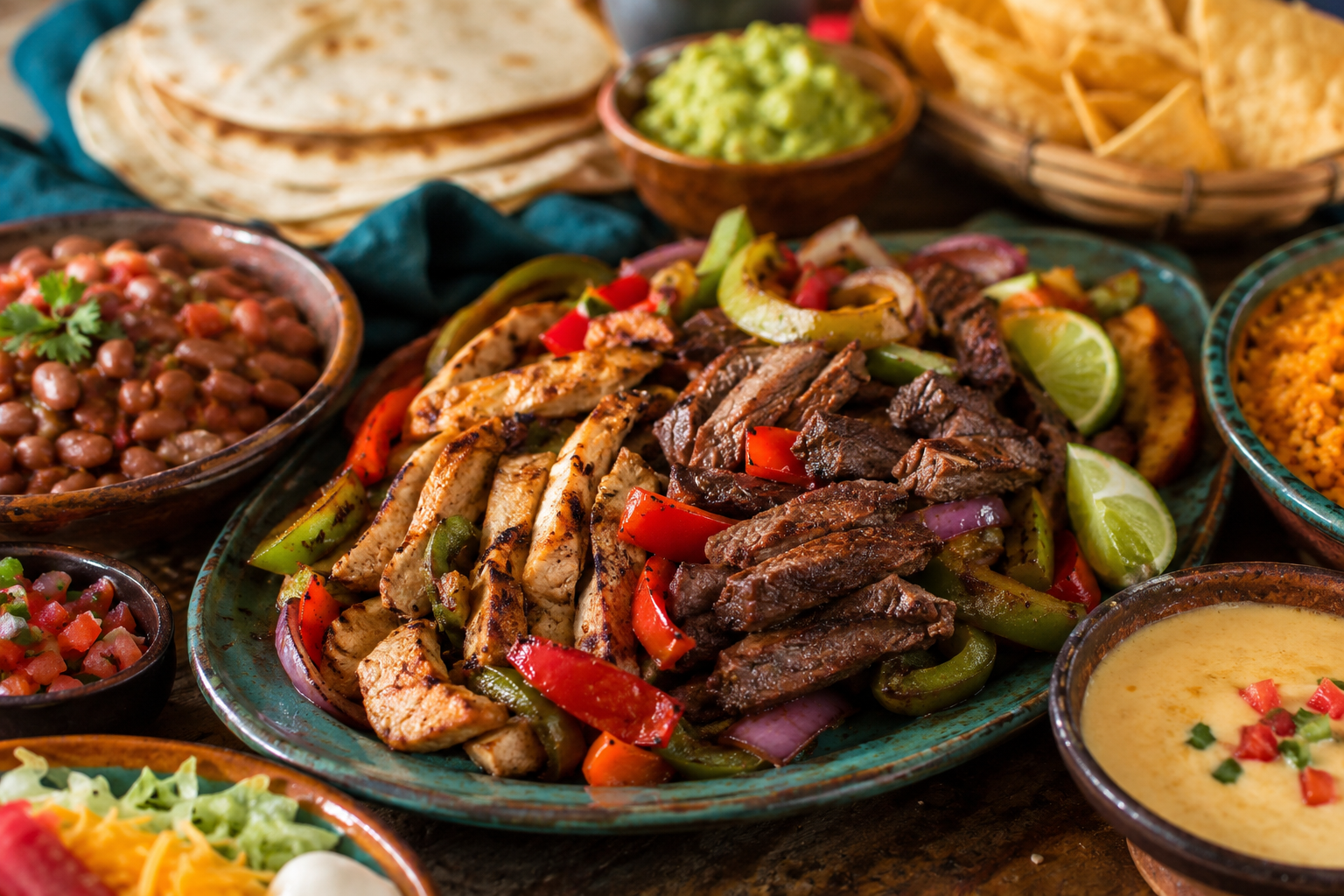
Tex-Mex is one of the most popular regional cuisines in the United States, born along the Texas-Mexico border from the blending of Mexican cooking traditions with local ingredients and tastes. It is a cuisine in its own right, distinct from the food of interior Mexico.
Roots in Tejano Culture
The foundations of Tex-Mex come from Tejanos — Texans of Mexican descent — whose home cooking combined Spanish, Mexican and Indigenous influences. As Texas grew, this food adapted to new ingredients, notably yellow cheese, cumin, wheat flour and beef in greater quantities than was common further south.
Signature Dishes
- Fajitas — grilled, sliced beef (originally skirt steak) served sizzling with tortillas, born from ranch cooking.
- Nachos — invented in the 1940s in a town near the border, when a maître d’ improvised a snack from tortilla chips, cheese and jalapeños.
- Chili con carne — a Texas staple of meat and chiles.
- The breakfast taco — a morning institution, especially in San Antonio and Austin, filled with eggs, potato, bacon or chorizo.
- Combination plates — enchiladas, tacos, rice and refried beans, smothered in cheese and chili gravy.
Tex-Mex vs. Mexican
The differences are real. Tex-Mex leans on yellow cheese, cumin, flour tortillas and beef, and favors the hearty combo plate. Interior Mexican cuisine uses a wider range of regional ingredients, fresh cheeses, corn tortillas and complex sauces like mole. Neither is “fake” — they are simply different traditions, and many cooks honor both.
A Living Cuisine
Tex-Mex continues to evolve, with chefs elevating its classics and home cooks passing recipes down through generations. From a roadside taqueria to a bustling San Antonio institution, it remains warm, generous food meant for sharing.
To eat Tex-Mex in Texas is to taste the border itself — a place where two food cultures met and created something new.