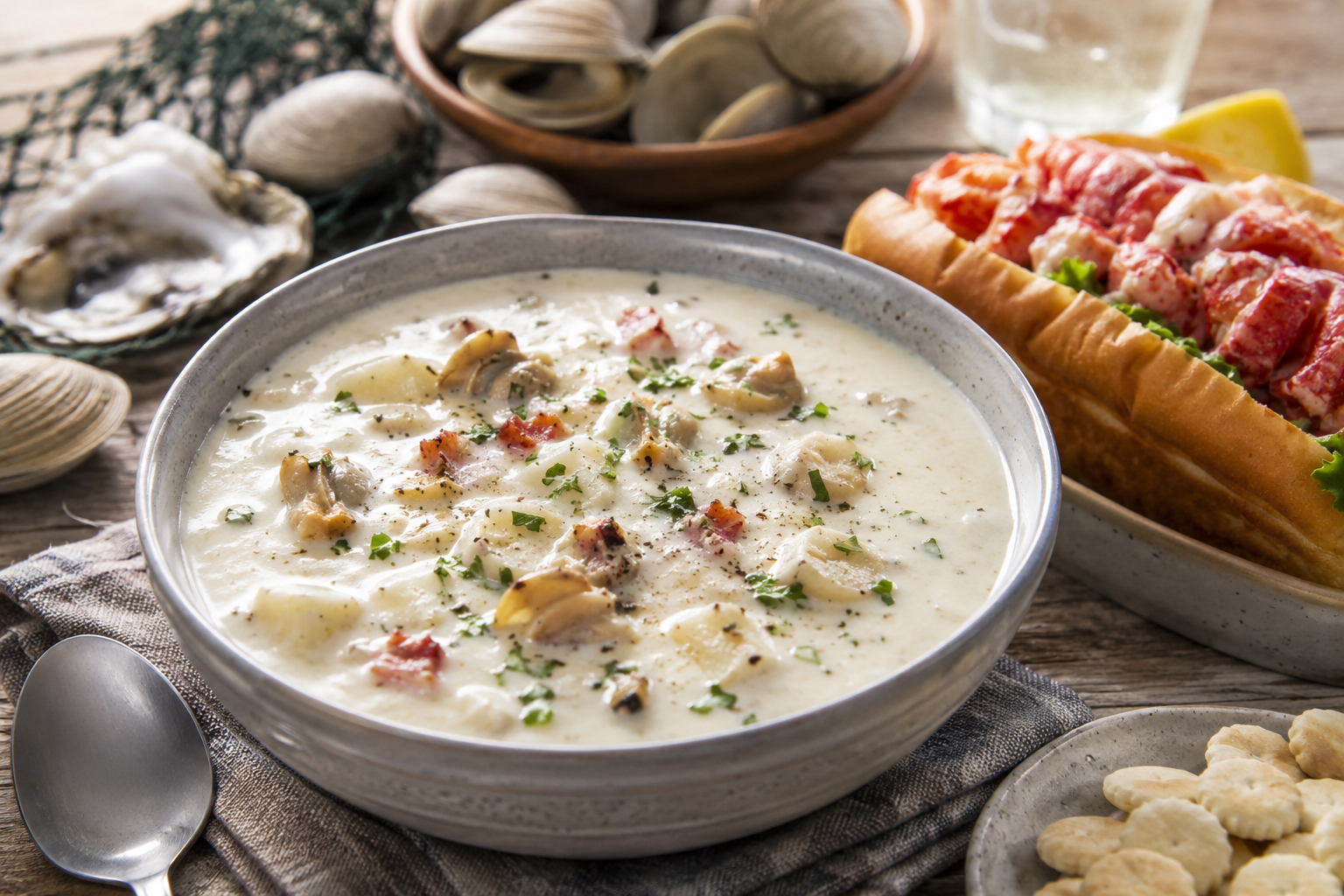
New England’s cold Atlantic waters have shaped a distinctive regional cuisine built around seafood, dairy and simple, hearty preparations. At its heart is a bowl of clam chowder.
The Chowder Question
New England clam chowder is thick, creamy and white, made with clams, potatoes, onions and salt pork or bacon in a milk or cream base. It is comfort food, especially on a cold, foggy day. This sets it apart from Manhattan clam chowder, which is tomato-based and red — a style many New Englanders regard with friendly suspicion. There is even a clear-broth “Rhode Island” style.
Fried Clams
The fried clam is another New England original, reportedly invented in Massachusetts in the early 20th century. Whole-belly clams, lightly battered and fried, are a summer staple at seaside “clam shacks.” Purists prefer the whole belly to the chewier strips.
The Lobster Roll
The lobster roll is the region’s most famous handheld food: chunks of lobster meat in a toasted, split-top bun. The two camps are the Maine style (chilled, with a little mayonnaise) and the Connecticut style (warm, with melted butter). Both are delicious, and the debate is part of the fun.
Beyond Seafood
- Boston baked beans — slow-baked with molasses, the dish behind the city’s nickname “Beantown.”
- Clam bakes — a coastal tradition of steaming clams, lobster, corn and potatoes, sometimes over seaweed.
- Maple syrup — Vermont and the region produce some of the country’s finest.
- Apple cider and pie — autumn essentials.
Eating Well in New England
The best seafood is often found at unpretentious shacks and markets near the water, where the catch is freshest. Go in summer for clam shacks and lobster, in fall for cider and harvest foods, and any time for a warming bowl of chowder.
New England cuisine is unfussy by design — it lets excellent ingredients, especially from the sea, speak for themselves.