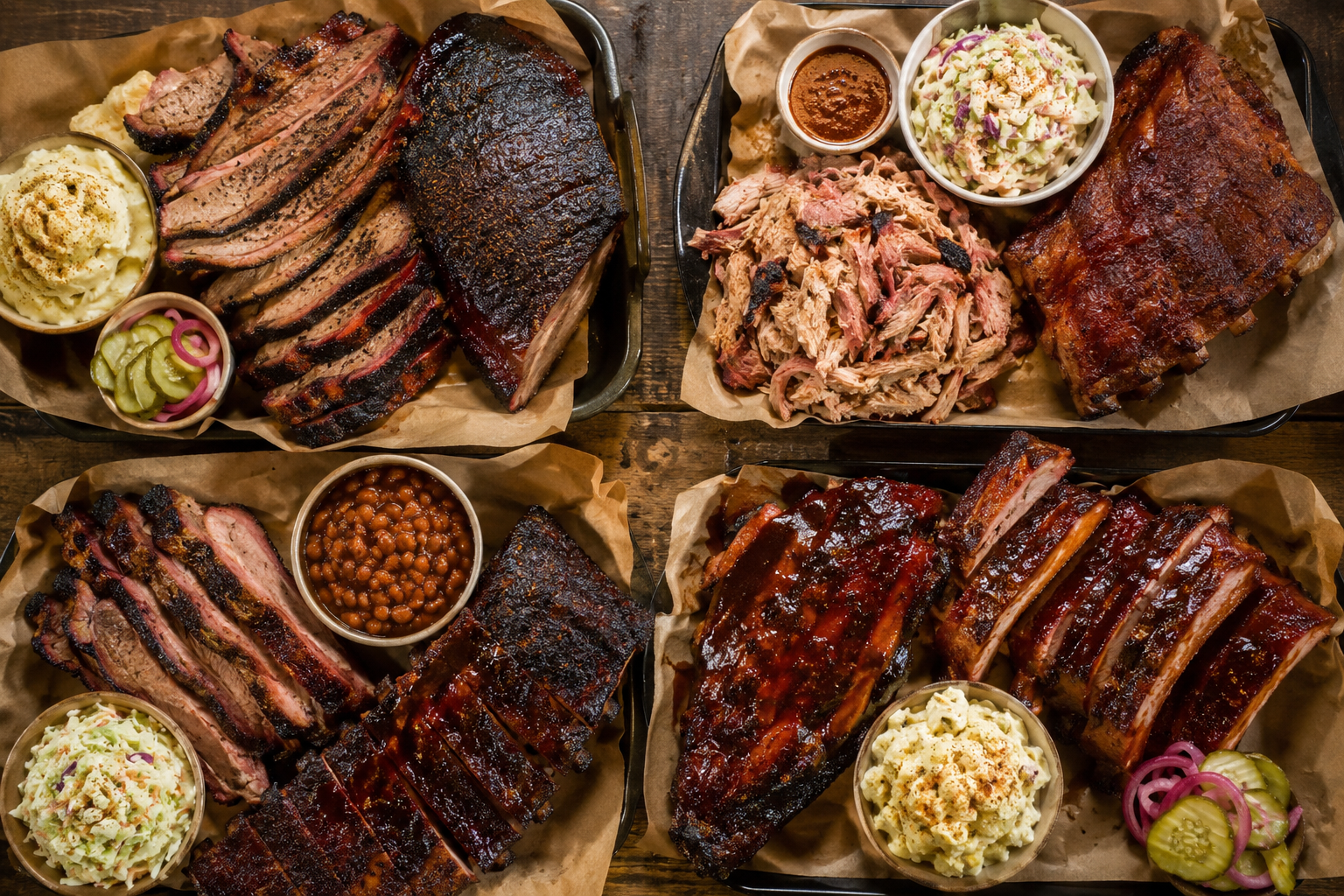
Barbecue in the United States is not one thing — it is a set of fierce regional traditions, each with its own preferred meat, wood, sauce and ritual. Cross a state line and the rules change completely. Here is how the major styles differ.
Texas: Beef and Smoke
In Central Texas, barbecue means beef brisket, seasoned simply with salt and pepper and smoked low and slow over post oak for many hours. The bark — the dark, peppery crust — is prized, and purists eat it with little or no sauce, often served on butcher paper with white bread, pickles and onions. The emphasis is on the quality of the smoke and the meat, not on dressing it up.
The Carolinas: Pork and Vinegar
Move east and pork takes over. In eastern North Carolina, the whole hog is smoked and chopped, then dressed with a thin, tangy vinegar-and-pepper sauce. In the western part of the state, cooks favor the pork shoulder and add a touch of tomato. South Carolina is famous for a distinctive mustard-based “Carolina Gold” sauce, a nod to the state’s German heritage.
Memphis: Ribs, Wet or Dry
Tennessee’s barbecue capital is known for pork ribs served two ways. “Dry” ribs are coated in a spice rub and served without sauce; “wet” ribs are mopped with a tomato-based sauce. Memphis is also home to the barbecue sandwich topped with coleslaw, and to one of the country’s biggest barbecue competitions each spring.
Kansas City: The Sauce State
Kansas City, Missouri, is the great unifier — cooks here smoke many kinds of meat, from ribs to brisket to burnt ends (the caramelized tips of the brisket, a local delicacy). The signature is the sauce: thick, sweet and tomato-based with molasses. Burnt ends, once given away for free, are now a sought-after specialty.
What They Share
For all their differences, these traditions agree on the fundamentals: time, patience and wood smoke. Real barbecue is cooked slowly at low temperatures, a method born of using tougher, cheaper cuts and transforming them through hours of care. It is also communal — barbecue is food meant to be shared at long tables, often on a weekend, often with people you love.
How to Explore It
- Go early. The best places often sell out by mid-afternoon.
- Order the regional specialty before branching out — brisket in Texas, whole hog in the Carolinas, ribs in Memphis, burnt ends in Kansas City.
- Ask about the wood. Pitmasters love to talk about it, and it tells you a lot about the flavor.
There is no single “best” barbecue in America — only the one in front of you, cooked by someone who has spent all night tending the fire.