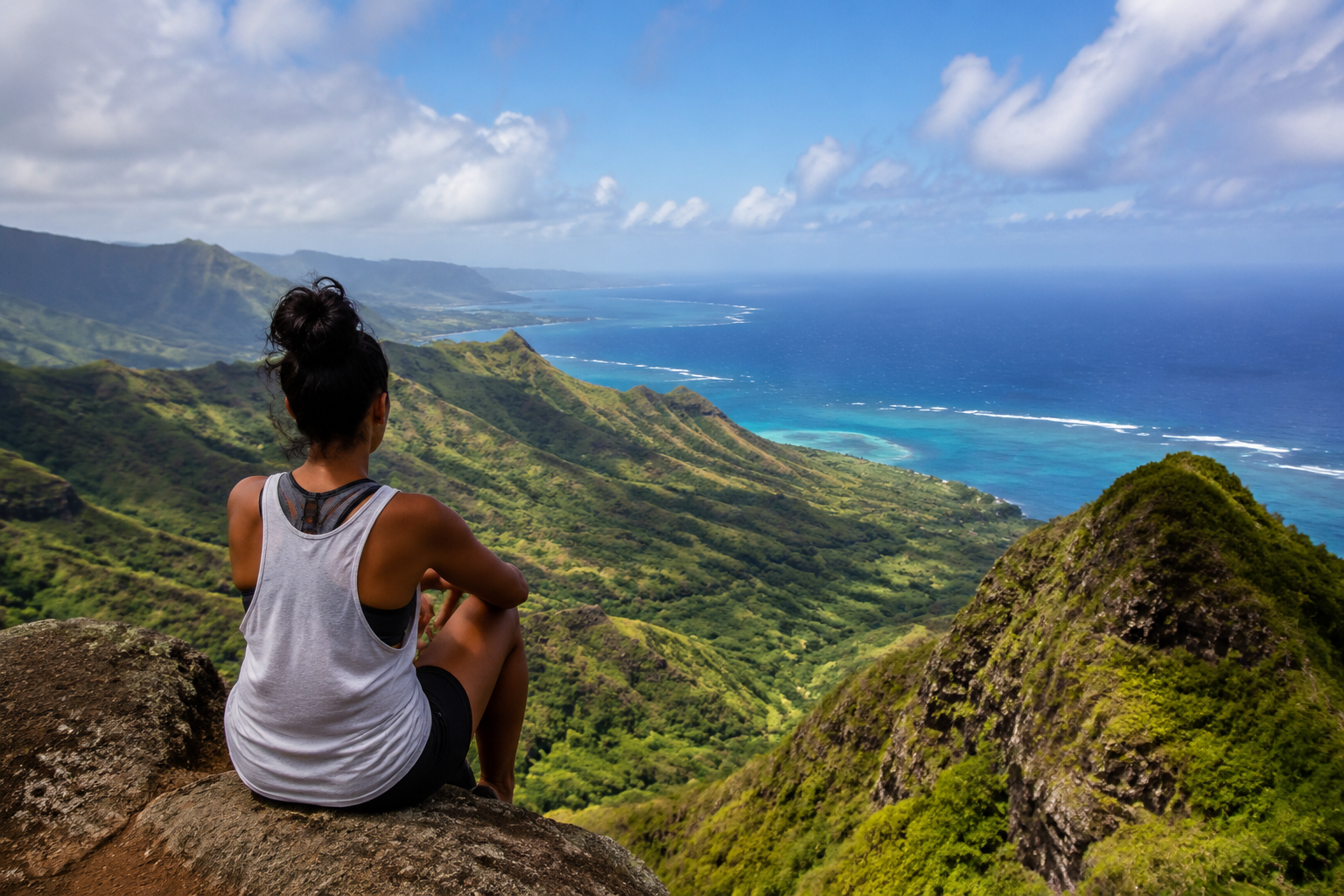
It is easy to experience Hawaii entirely from a resort pool, but the islands reward travelers who step outside the lobby. Seeing Hawaii thoughtfully means understanding that it is a living home and a place with a deep culture — not a backdrop.
Start With the Culture
Hawaii has its own language, history and customs that predate statehood by centuries. Learning a few basics goes a long way: aloha means far more than hello, mahalo means thank you, and kapu marks places that are off-limits or sacred. Visit a cultural site like a heiau (temple) or a living-history center, and choose tours led by Native Hawaiian guides where possible.
Eat Local
Skip a few chain meals in favor of local food: plate lunches, poke from a fish market, fresh fruit from roadside stands, and shave ice in the afternoon heat. Farmers markets are some of the best places to eat and to meet the people who grow the food.
Protect the Ocean and Land
- Reef-safe sunscreen is required by law on some islands; certain chemicals damage coral.
- Keep your distance from sea turtles and monk seals — both are protected, and approaching them is illegal.
- Stay on trails and heed closures; fragile ecosystems recover slowly.
- Never take rocks or sand — beyond the cultural offense, it strips beaches that are already eroding.
Choose Your Island
Each island has a different character. Oahu blends city life and history, including Pearl Harbor. Maui is known for the Road to Hana and Haleakalā’s volcanic summit. Kauai is the lush, quiet “Garden Isle.” The Big Island of Hawaii offers active volcanoes and dramatic landscape diversity. Trying to “do” all of them in one short trip means seeing none of them well.
Travel in the Off-Season
Spring and fall bring smaller crowds and better prices than the winter and summer peaks. Booking activities directly with local operators keeps more of your money in the community.
Leave It Better
Many communities now ask visitors to travel with a sense of mālama — to care for the place. Some hotels and nonprofits even organize volunteer mornings restoring fishponds or planting native species. An hour of that work can be the most memorable part of a trip, and it leaves the islands a little better than you found them.