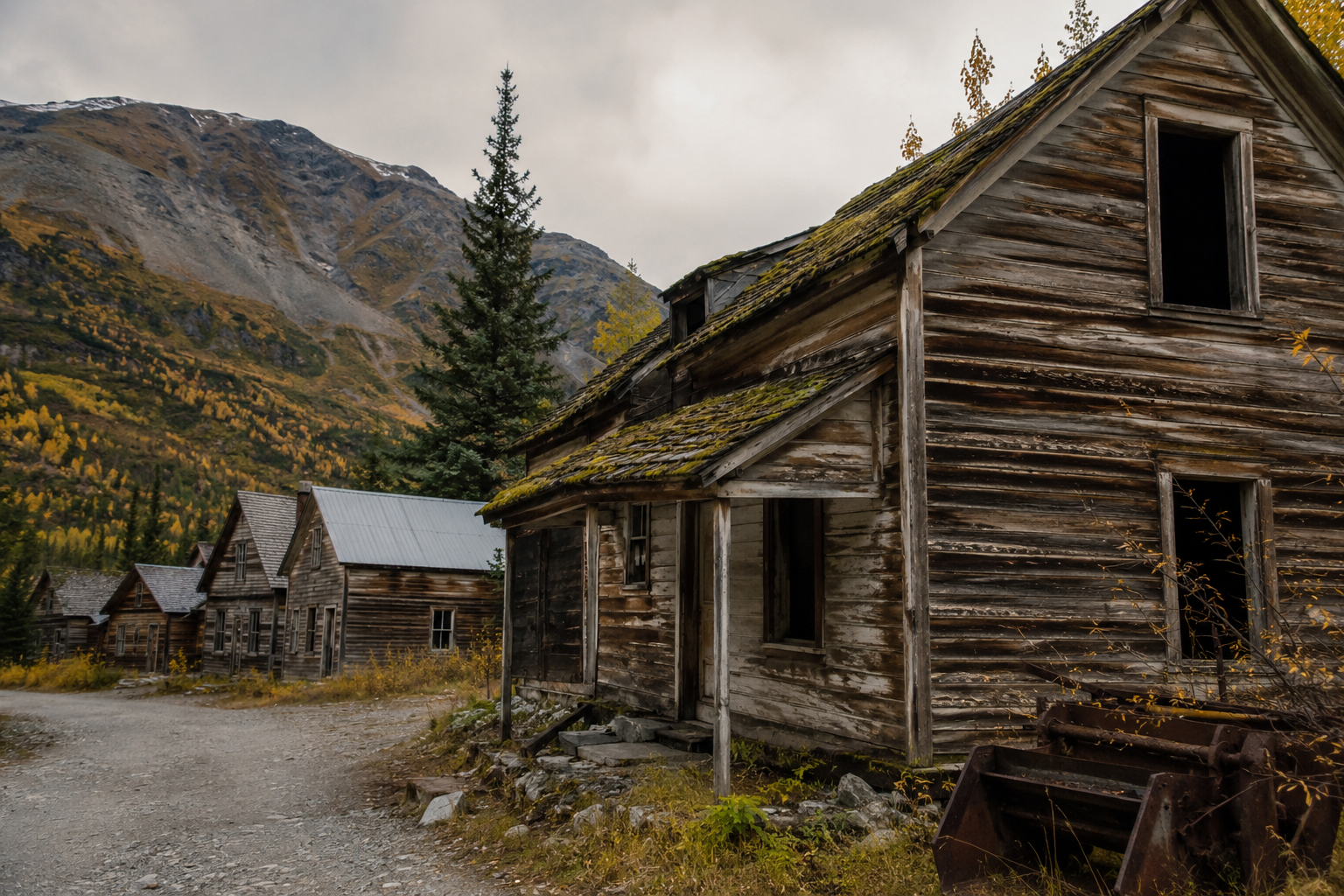
In 1896, gold was discovered in a tributary of the Klondike River, and within two years tens of thousands of people set out for the far north in one of history’s last great gold rushes. Most never struck it rich. But the towns they built — and the routes they suffered along — still shape Alaska today.
Skagway: Gateway to the Klondike
Skagway exploded almost overnight as the main port for prospectors heading to the goldfields. From here they faced the brutal Chilkoot and White Pass trails into Canada. The Canadian authorities required each person to bring a “ton of goods” — roughly a year’s supplies — to prevent starvation, which meant hauling gear up the passes in dozens of exhausting trips.
Today Skagway’s wooden-fronted downtown is preserved as part of the Klondike Gold Rush National Historical Park. You can walk the same boardwalks, see outfitters’ storefronts, and ride the White Pass & Yukon Route railway, an engineering feat carved into the mountains in 1898.
Nome: Gold on the Beach
While the Klondike drew the headlines, a second rush hit Nome, on the Bering Sea coast, in 1899 — and this time the gold was found in the sand of the beach itself. Anyone with a shovel and a pan could try their luck, and a tent city of thousands sprang up along the shore. Nome later became famous for a different reason: the 1925 “serum run,” when dog-sled teams relayed diphtheria medicine across the frozen interior, an event now commemorated by the Iditarod race.
Fairbanks and the Interior
Gold strikes near Fairbanks in the early 1900s turned a riverboat landing into the largest city in Alaska’s interior. Unlike the boom-and-bust camps, Fairbanks endured, supported by dredging operations that worked the creeks for decades. Pioneer Park and the nearby gold dredges preserve this chapter.
What the Rush Left Behind
The gold rush did more than scatter mining towns across the map. It accelerated the mapping and settlement of Alaska, brought infrastructure to remote regions, and created a culture of self-reliance and reinvention that still defines the state. It also came at a cost to Alaska Native communities, whose lands and lives were disrupted by the sudden flood of outsiders — a part of the story that modern interpretation increasingly acknowledges.
Visiting Today
- Skagway is easiest to reach by cruise ship or via the scenic drive from Whitehorse, Canada.
- Summer (June–August) offers long daylight and full access to historical sites; many close in winter.
- Ranger programs in the national historical park are free and bring the era to life.
Stand at the foot of the White Pass and it is easy to picture the line of stampeders disappearing into the clouds — chasing a fortune most would never find, and building a state in the process.