Few American states have a food identity as strong as Louisiana’s. Walk into a kitchen in New Orleans or out in the bayou country around Lafayette and you will smell the same starting point — onion, celery and bell pepper sizzling in fat, the so-called “holy trinity.” But Louisiana actually carries two intertwined traditions, Creole and Cajun, and understanding the difference unlocks the whole cuisine.
Two Histories on One Plate
Creole cooking grew up in the city. It blends French, Spanish, West African, Caribbean and Native American influences, refined in the kitchens of cosmopolitan New Orleans. Cajun cooking comes from the countryside — the Acadians, French settlers expelled from Canada in the 18th century, who adapted their cooking to the ingredients of southern Louisiana’s swamps and prairies.
The old rule of thumb: Creole food often uses tomatoes, Cajun food usually does not. Creole leans urban and layered; Cajun leans rustic and one-pot. Both are delicious, and in practice the line blurs.
Gumbo: The State in a Bowl
Gumbo is the dish people argue about most. It starts with a roux — flour cooked in oil until it turns the color of milk chocolate or darker, a slow process that builds deep, nutty flavor. From there cooks add the trinity, stock, and proteins: chicken and andouille sausage, or seafood like shrimp and crab. Some thicken with okra (the word “gumbo” likely comes from a West African term for okra); others use filé, ground sassafras leaves added at the end. Served over rice, a good gumbo tastes like patience.
Jambalaya and Étouffée
Jambalaya is Louisiana’s answer to a rice dish that cooks everything together — meat, sausage, vegetables and rice simmered in one pot until the grains absorb the flavor. The “red” version with tomatoes is Creole; the “brown” version without is Cajun.
Étouffée, meaning “smothered,” is a rich stew of crawfish or shrimp served over rice. It is silkier than gumbo and built on a lighter roux, letting the shellfish shine.
Beyond the Big Three
- Boudin — a soft sausage of pork and rice, a gas-station staple in Cajun country.
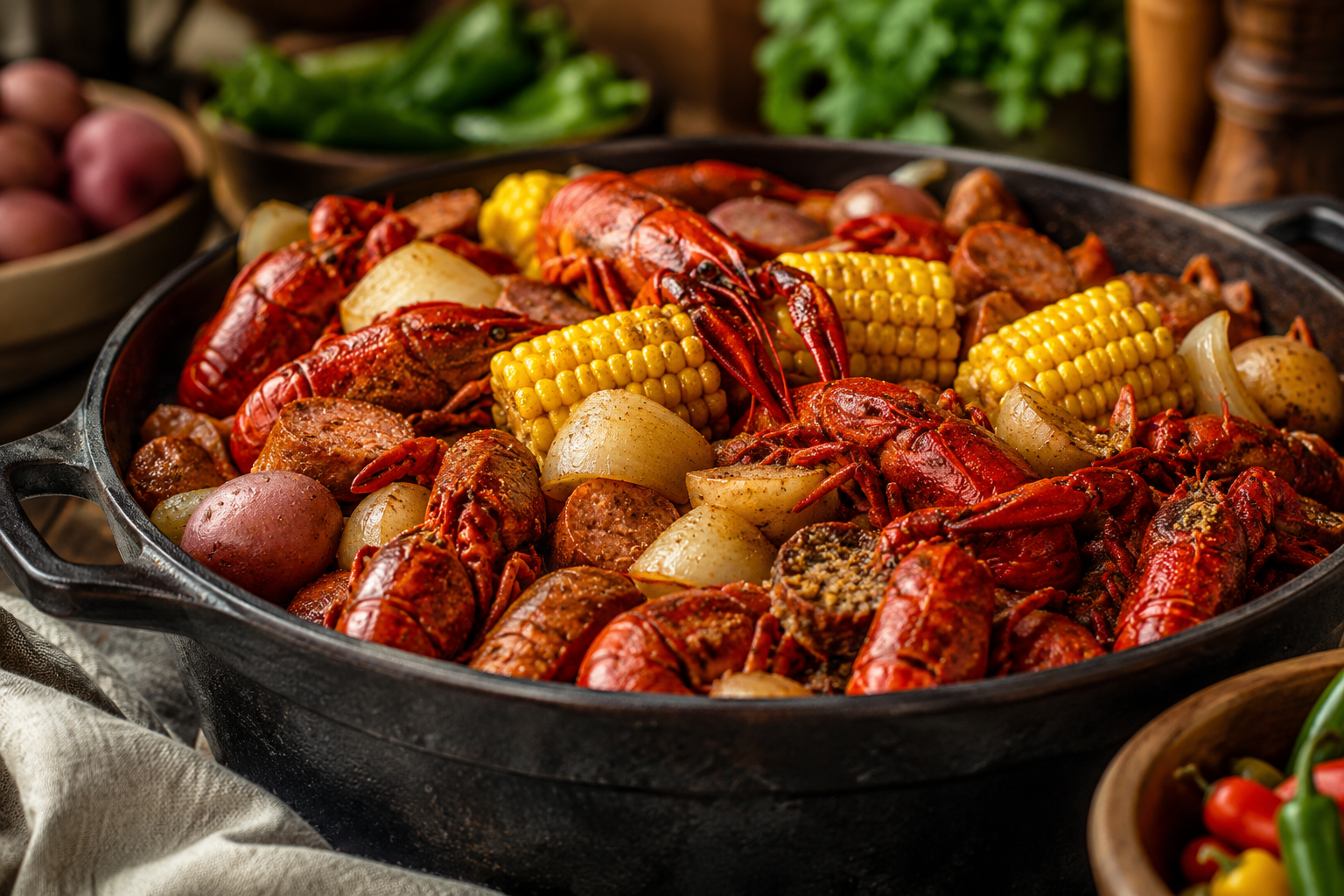
- Crawfish boil — a spring ritual where crawfish, corn and potatoes are boiled with heavy seasoning and dumped on a newspaper-covered table.
- Beignets — square French doughnuts buried in powdered sugar, best with chicory coffee.
- Muffuletta — a round sesame loaf stuffed with cured meats, cheese and a briny olive salad, born in New Orleans’s Italian community.
How to Eat Well in Louisiana
Skip the assumption that the fanciest restaurant has the best food. Some of the finest meals come from neighborhood spots, weekend boils and family kitchens. Ask locals where they eat. Order the special. And when someone offers to teach you how they make their roux, say yes — the recipe is rarely written down, and it is the real heart of the state’s table.